
Latest News
▲
5 Ways to Reduce Construction Time for Your Steel Structure Warehouse Project
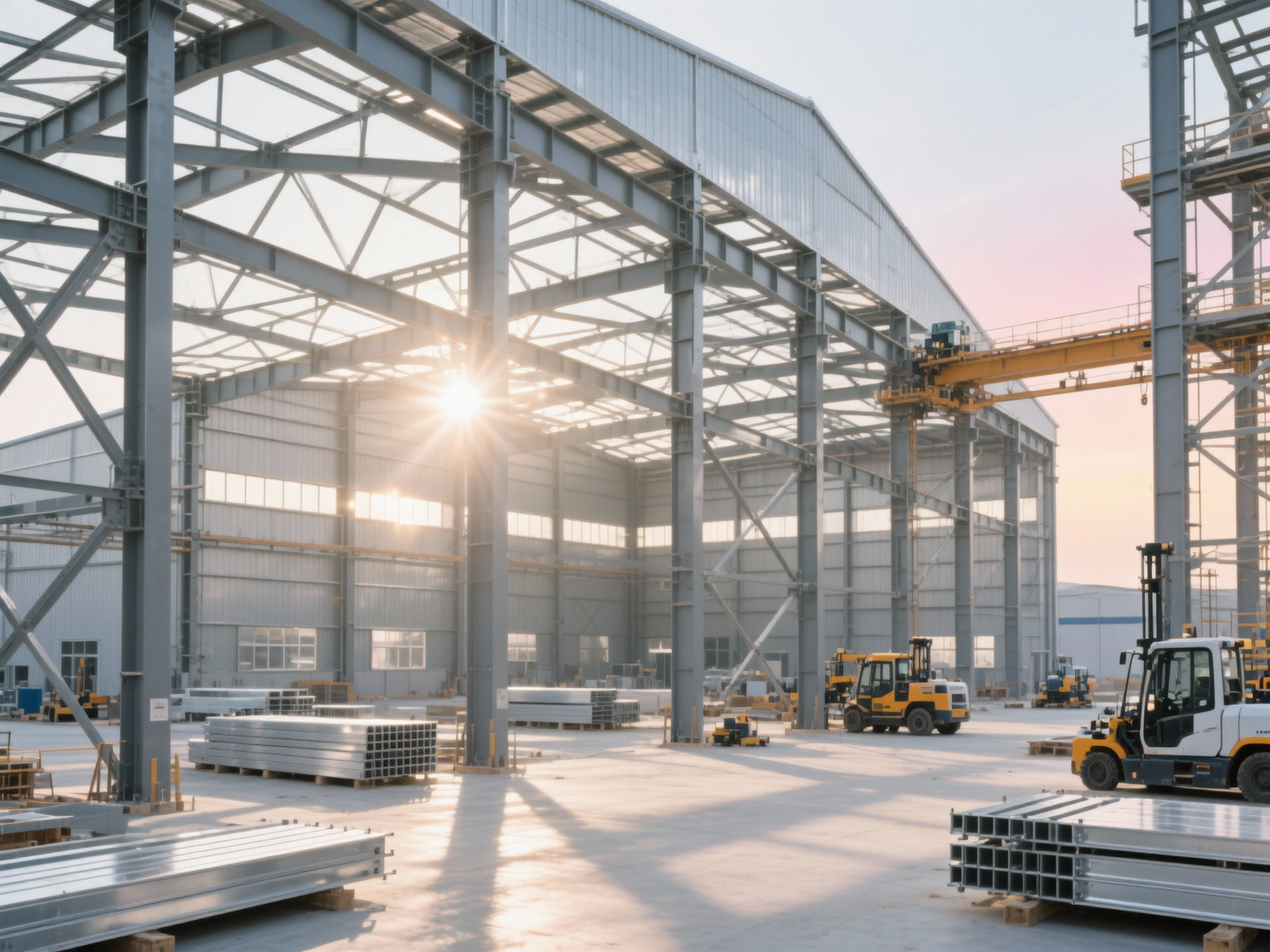
Efficient project timelines are crucial for any steel structure warehouse development, directly impacting overall cost control and operational readiness. With over 20 years of expertise, Shandong Yuegong Steel Structure Co., Ltd. (YG Steel Structure) understands the challenges in balancing quality, precision, and speed. This article explores five proven strategies to help procurement teams, business decision-makers, and project managers effectively reduce construction time while maintaining structural integrity and long-term performance.
Understanding the Time Factors in Steel Warehouse Construction
Construction time for a steel structure warehouse typically spans 8–20 weeks depending on design complexity, material availability, and weather conditions. The primary factors that influence schedule efficiency include design accuracy, procurement synchronization, fabrication speed, and on-site assembly coordination. Identifying bottlenecks early is essential for projects aiming to cut delivery time by 15–30% without affecting safety and standards.
YG Steel Structure’s integrated production base of 100,000㎡ ensures an annual output capacity of 50,000 tons, allowing parallel production lines for light and heavy steel components. This approach shortens the typical production phase by 20–25% compared to decentralized suppliers, thereby accelerating the subsequent installation process.
Another determinant is the coordination between structural design and procurement. For example, finalizing the structural drawing specifications within the first 7–10 working days of approval ensures that material ordering aligns with available fabrication windows. This synchronization prevents idle line time and maintains project momentum.
A well-designed pre-engineering plan using digital modeling tools and load simulations at YG Steel Structure minimizes field adjustments and can potentially reduce assembly duration by 10–18%. Such digital-first execution models are now standard among high-performance enterprises within the construction materials industry.
Strategy 1: Optimize Structural Design and Material Planning
Design optimization is one of the fastest ways to achieve measurable time savings. Early-stage 3D modeling and finite element calculations can identify redundant connections and excessive member sizes, cutting material use by 8–12% while simplifying on-site welding. When combined with modular component layouts, these optimizations streamline transportation and assembly.
To help procurement teams make clear decisions, the table below summarizes common material design optimization outcomes in warehouse structures.
By aligning design adaptations with standardized sections and factory-ready connections, YG Steel Structure enables structural modules like Steel structure venue systems to be prefabricated simultaneously, further compressing the total timeline.
Strategy 2: Integrated Fabrication and Quality Control
The in-house combination of design, fabrication, and inspection under one roof is a hallmark of YG Steel Structure’s efficiency model. With multiple automated CNC lines and H-beam assembly stations, the factory achieves batch accuracy within ±0.5mm tolerance, lowering rework probability by 60%. This directly translates into faster site assembly and improved joint alignment.
Efficient quality control does not rely solely on post-production checks; it involves a 4-stage inspection system covering raw material verification, component dimensional checks, weld seam examination, and final paint thickness testing (80–120μm range). Each stage mitigates potential delays caused by rework or replacements on-site.
The following table highlights a typical integrated quality control approach used in fast-track warehouse projects.
By adhering to ISO-based inspection schedules, YG Steel Structure shortens project turnover while safeguarding compliance with China’s Class I and Class A certifications—critical markers for corporate procurement assurance.
Strategy 3: Streamlined Supply Chain and Logistics
A well-structured supply chain can save 10–15% of project time. YG Steel Structure integrates long-term partnerships with steel mills and coating suppliers within Shandong province, where material transportation typically takes less than 48 hours. This short-distance network minimizes lead time fluctuations due to external freight dependencies.
Moreover, bundling multiple warehouse components—trusses, purlins, and panels—into pre-scheduled deliveries reduces unloading frequency from 10 instances to 4–6 cycles per week. This consolidation not only improves site management but also ensures consistent assembly progress without idle manpower hours.
Projects adopting batch delivery models combined with modular structures, such as those employed in the Steel structure venue, exemplify how packaging and logistics planning can compress timelines by up to 12% in large-scale industrial parks.
An integrated ERP tracking system allows daily synchronization between fabrication output and on-site consumption, resulting in real-time material scheduling that can prevent delays longer than 24 hours. Such digital supply coordination is a necessary standard for projects exceeding 10,000㎡ in area.
Strategy 4: Pre-assembly and On-site Management
Pre-assembly reduces field welding and alignment by an estimated 30–40%. Modular sub-components—like rigid frames and column bases—can be pre-bolted in factory conditions where tolerances are controlled to ±1mm. As a result, onsite adjustments usually take only 3–5 hours instead of full-day corrections.
YG Steel Structure employs a sequential installation strategy often divided into 4 operational steps: base leveling, frame erection, bracing installation, and envelope closure. Each step undergoes a daily safety check and a weekly progress evaluation ensuring measurable productivity benchmarks of 200–250㎡ erected per shift.
A unified construction management dashboard helps project leaders monitor real-time progress, verify inspection documents, and share status updates with decision-makers remotely. Such transparency reduces communication delays and ensures steady adherence to project deadlines.
The combined effect of off-site prefabrication and disciplined on-site management typically shaves 2–3 weeks from total project duration—a critical advantage for enterprises requiring operational setup within tight seasonal or permit-related windows.
Strategy 5: Early Coordination and Continuous Communication
Delays often stem from poor communication between design, procurement, and construction teams. Setting up a joint coordination schedule before fabrication begins—usually 10–14 days prior—can align all stakeholders on drawings, milestones, and delivery slots. This prevents overlapping tasks and ensures efficient dependencies.
In YG Steel Structure’s workflow, a bi-weekly review meeting is conducted during both design and assembly stages to synchronize all involved parties. These reviews are part of a 6-step integrated communication framework designed to maximize efficiency and accountability.
Maintaining open communication throughout the supply chain helps prevent costly waiting periods—often amounting to 5–8 days in poorly coordinated projects. Leveraging this collaborative culture allows enterprise clients to maintain predictability in cost and schedule, leading to improved ROI metrics across multiple facilities.
These efficient protocols transform time savings into tangible financial advantages by reducing equipment rental durations and labor overheads by 10–15%, reinforcing how operational alignment directly supports both speed and profitability.
Why Partner with YG Steel Structure for Fast-Track Projects
With over two decades of structural design and manufacturing specialization, YG Steel Structure provides a fully integrated service—from customized drawing to post-assembly inspection—all compliant with Class I Construction and Class A Design certifications. This ensures that every warehouse or industrial facility project meets national quality benchmarks while keeping lead times competitive.
Clients benefit from an established production infrastructure spanning 100,000㎡, multiple dedicated light and heavy steel lines, and a proven project management methodology backed by the China Steel Construction Society membership. Such structural alignment guarantees reliability and professional accountability from pre-design through commissioning.
If you are a procurement manager or project engineer seeking to confirm design adaptability, shorten fabrication turnaround, or ensure supplier readiness for large-scale builds, YG Steel Structure offers detailed consultation covering parameter verification, customization scope, and on-site support workflows.
Contact YG Steel Structure today to discuss project-specific design schedules, fabrication capacities, and how integrated steel construction methodologies can help you achieve faster, safer, and more cost-efficient outcomes for your upcoming warehouse projects.
Related Posts
- ▶ Steel Structures: Meeting Client Demands with Precision
- ▶ What Project Managers Should Know Before Approving a Steel Structure Warehouse Plan
- ▶ Comparing Steel Structure Warehouses with Traditional Concrete Buildings in 2026
- ▶ How Energy Efficiency Is Changing the Future of Steel Structure Warehouse Design
- ▶ 5 Ways to Reduce Construction Time for Your Steel Structure Warehouse Project
- ▶ Is a Steel Structure Warehouse the Best Option for Cold Storage Facilities?
Send Us A Message