
Latest News
▲
Comparing Steel Structure Warehouses with Traditional Concrete Buildings in 2026
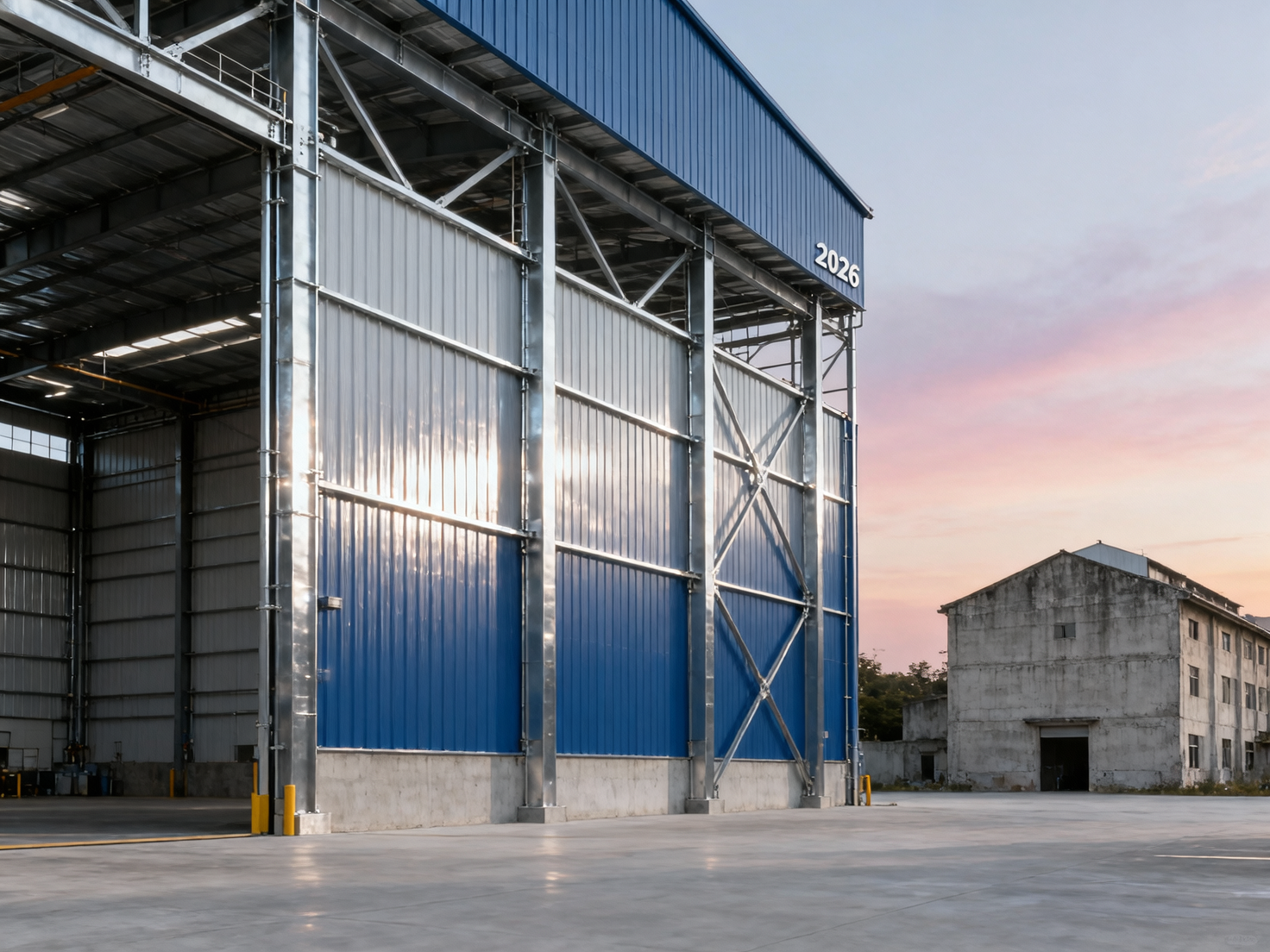
In 2026, as construction demands evolve toward efficiency, sustainability, and cost optimization, choosing between a steel structure warehouse and a traditional concrete building becomes a strategic decision for enterprises. Leveraging advanced engineering and fast assembly, steel structures are redefining industrial architecture. For procurement specialists, business decision-makers, and project managers, understanding these differences is vital to ensure greater flexibility, durability, and long-term returns in modern construction.
1. Industry Overview: The Shift Toward Steel-Based Solutions
Global construction data from the past five years indicate a consistent annual growth rate of 6% in steel structure projects, especially in logistics, manufacturing, and public facility sectors. Compared to conventional concrete buildings, steel structures deliver faster installation, better recyclability, and more predictable lifecycle costs. In regions experiencing rapid urban expansion, time-to-market is often shortened by 25–40% using pre-fabricated steel modules.
Shandong Yuegong Steel Structure Co., Ltd. (YG Steel Structure), headquartered in Jinan, Shandong, has deeply participated in this transformation with its 100,000㎡ manufacturing base and over 50,000 tons annual output capacity. With China’s Class I Construction Qualification and Class A Steel Structure Design Certification, the company provides engineered solutions ready for industrial standards like GB50017 and Eurocode 3 equivalents.
Enterprises adopting steel-frame warehouses benefit from modular pre-fabrication and reduced dependence on seasonal labor availability, making construction feasible across all months with tolerance to ±5°C weather variations. This adaptability lowers project delays by up to 30% compared to concrete pouring seasons.
For decision-makers, the primary motivation behind this shift includes recyclable use (up to 98% material reuse rate), seismic resilience exceeding level 8 design standards, and a shorter depreciation cycle that allows capital recovery within 10–12 years for medium-scale facilities.
2. Structural Comparison: Steel Warehouses vs. Concrete Buildings
To make informed procurement decisions, project leaders must evaluate structural distinctions, cost performance, and lifecycle behavior between steel and concrete systems. Key comparison metrics include load efficiency, environmental compliance, and project timelines.
This data demonstrates that steel structure warehouses provide superior controllability and eco-efficiency. In addition, combined systems like the Steel Frame With Mezzanine Floor add internal flexibility for dual-level storage and office integration, improving space utilization by an average of 20–30%.
Concrete buildings, while proven in long-term static durability, typically require 1.5×–2× higher labor and equipment costs during formwork and reinforcement phases. For projects exceeding 10,000㎡, choosing steel framing can cut transport and foundation loads by 15%–25%, translating into material transportation savings and reduced environmental impact.
3. Cost, Lifecycle, and Environmental Efficiency
Modern procurement processes focus on TCO (Total Cost of Ownership). While steel structure systems may require slightly higher material cost per ton (approximately USD 750–900/ton), they generate cost recovery advantages via lower assembly expenses and minimal maintenance requirements across a 30–40 year life expectancy.
Concrete systems, on the other hand, incur higher lifecycle cost due to surface cracking and reinforcement corrosion, which typically emerge after 10–15 years, demanding periodic reinforcement costing 8–12% of initial investment every decade. In contrast, galvanized steel members stay serviceable with protective coating maintenance every 8–10 years, reducing downtime significantly.
From a sustainability standpoint, steel’s modular reuse capability aligns with global carbon-reduction initiatives and qualification pathways such as LEED and Chinese Green Building Label requirements. In manufacturing, companies like YG Steel Structure employ CNC plasma cutting and automated H-beam welding lines that reduce material waste by 8–10% compared to conventional processes.
Steel offers dynamic adaptability during retrofits. If logistics demand changes, an existing warehouse can integrate mezzanines or extend side bays by 15–25 m with minimal downtime. This is where the Steel Frame With Mezzanine Floor system demonstrates real cost advantage, eliminating the need for additional foundations and reducing disruption periods down to 10–14 days.
4. Standards, Certification, and Compliance Considerations
Compliance remains a top priority for engineering managers and investors. When evaluating steel versus concrete, it is essential to consider adherence to structural codes, fire and corrosion resistance standards, and sustainability criteria imposed by industrial parks or government tenders.
YG Steel Structure ensures alignment with GB/T 50666 (Technical Standard for Steel Structure Fabrication) and ISO 9001 quality management systems. Structural performance checks follow GB50009–2012 for load calculations and GB50011–2010 for seismic design. For projects exported to regions following EN1090 or AWS D1.1 requirements, materials and welding procedures are pre-qualified to comply with those equivalents within a tolerance of ±2 mm dimensional accuracy.
In contrast, concrete buildings require on-site testing for compressive strength (typically 30–40 MPa) and slab load inspection over 28-day curing cycles, delaying commissioning schedules. Steel framing, however, enables factory-controlled quality verification through ultrasonic weld inspection and magnetic testing, achieving 100% traceability before shipment.
For multi-functional facility projects—industrial parks, logistic centers, and public storage—the combination of certified material sourcing and efficient documentation helps shorten approval time by 15–20% during the construction permit phase, ensuring early operational readiness.
5. Procurement and Decision-Making Guide for 2026 Projects
Procurement specialists evaluating steel structure warehouses in 2026 should follow a systematic approach across four essential stages: requirement analysis, supplier qualification, technical customization, and lifecycle budgeting. Each stage demands data-driven decisions to achieve ROI and regulatory compliance.
- Stage 1 – Requirement Analysis: Define floor clear height, crane load capacity (commonly 5–50 tons), and space flexibility for potential expansions.
- Stage 2 – Supplier Qualification: Check certifications, automated fabrication capabilities, and annual capacity (e.g., YG Steel Structure's 50,000-ton capacity base).
- Stage 3 – Design Customization: Integrate modular accessories, mezzanine levels, or bridge connections to optimize spatial function.
- Stage 4 – Cost and Delivery Control: Review payment milestones and logistics scheduling, ensuring lead times within 60–90 days from contract award.
When comparing quotes, firms must calculate not just per-square-meter prices but lifecycle figures including energy efficiency and maintenance frequency. A comprehensive procurement assessment may include five quantitative metrics: construction duration, lifecycle cost index, internal span, load capacity, and recyclability score.
In scenarios such as rapid industrial pivoting or logistics scaling, steel structures demonstrate remarkable resilience. Decision-makers can project amortization periods under 12 years even in climates with high humidity when integrated with anti-corrosion coatings of ≥100μm thickness.
6. FAQ: Addressing Common Procurement Concerns
How long does it take to construct a 10,000㎡ steel warehouse?
Typically around 4–5 months, depending on complexity and local approval schedules. This includes about 20–25 days for foundation and 60–75 days for assembly. Concrete alternatives may require nearly double, primarily due to curing periods.
What key certifications should I verify before selecting a steel structure supplier?
Prioritize suppliers with Class I Construction Qualification, Class A Design Certification, and ISO9001/ISO14001 management systems. For export-oriented projects, compliance with EN1090 welding and CE marking is essential to ensure acceptance in international markets.
Are steel structures cost-effective for colder climates?
Yes. Steel performs reliably under low temperatures (down to -30°C) when using Q345B or Q390 grade materials. Insulated sandwich panels and anti-condensation coatings should be integrated to maintain thermal efficiency without structural compromise.
Can mezzanine systems be integrated later?
Absolutely. Prefabricated modules like the mezzanine-integrated steel frame allow post-installation assembly within 2–3 weeks without foundation modification, enhancing usable area by 25–40%.
7. Why Choose YG Steel Structure
Choosing Shandong Yuegong Steel Structure Co., Ltd. means partnering with a company that combines over 20 years of expertise with proven Class I and A certifications. With automated production spanning light and heavy framing and a 50,000-ton annual capacity, YG ensures engineering precision, reliable timelines, and cost transparency for global B2B clients.
Enterprises seeking custom steel design can request parameter validation, full BOM confirmation, blueprint optimization, and logistics scheduling consultation. Whether you need standard warehouse frames, municipal bridges, or composite mezzanine systems, the company’s engineering team provides one-on-one technical support throughout pre-design, manufacturing, and on-site erection phases.
To explore tailored structural options, cost estimation, and compliance documentation for upcoming 2026 projects, contact YG Steel Structure’s engineering advisory team for professional consultation and customized proposal development.
Related Posts
- ▶ Steel Structures: Meeting Client Demands with Precision
- ▶ What Project Managers Should Know Before Approving a Steel Structure Warehouse Plan
- ▶ Comparing Steel Structure Warehouses with Traditional Concrete Buildings in 2026
- ▶ How Energy Efficiency Is Changing the Future of Steel Structure Warehouse Design
- ▶ 5 Ways to Reduce Construction Time for Your Steel Structure Warehouse Project
- ▶ Is a Steel Structure Warehouse the Best Option for Cold Storage Facilities?
Send Us A Message