
Latest News
▲
How Energy Efficiency Is Changing the Future of Steel Structure Warehouse Design
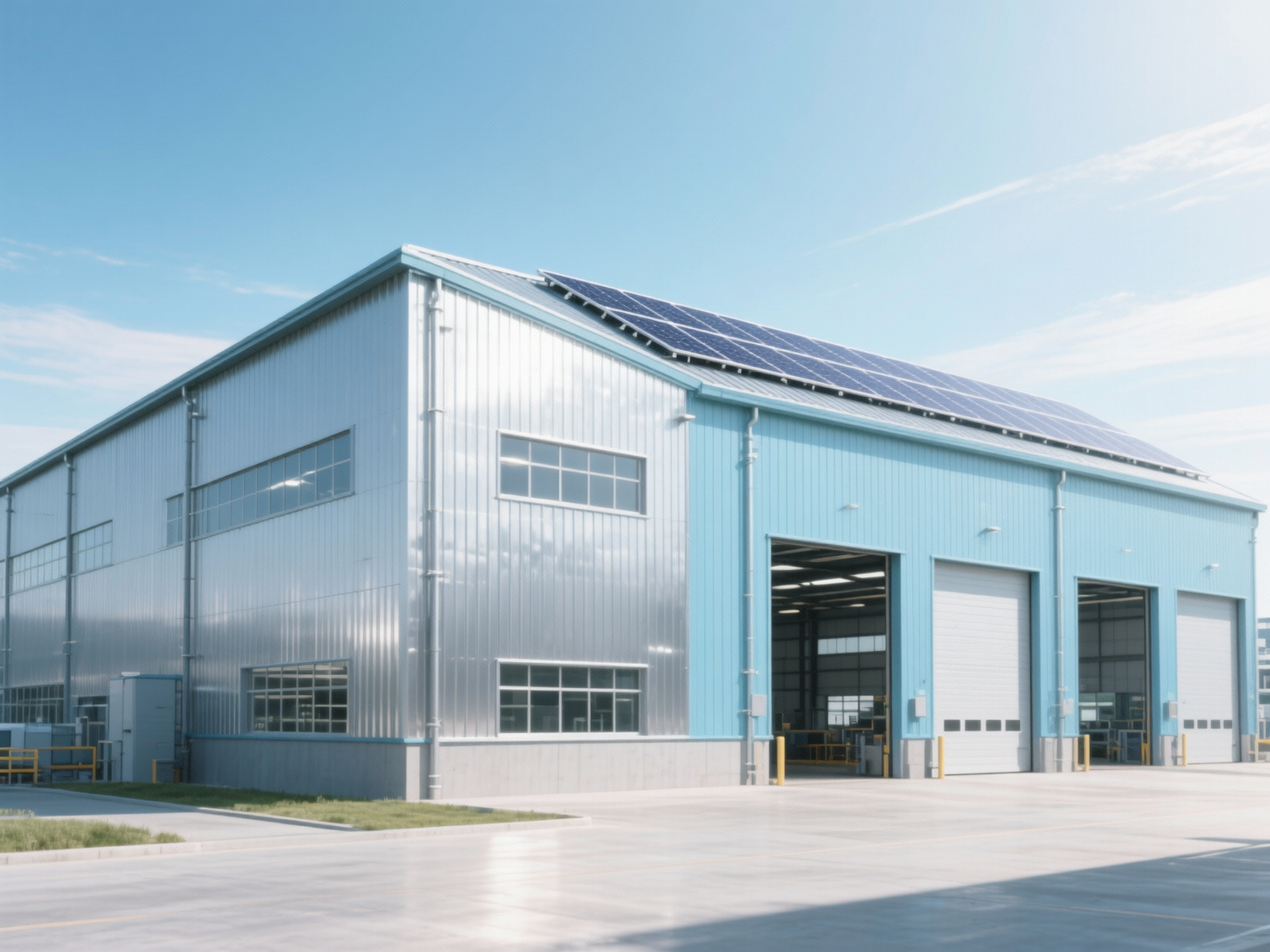
As global industries pursue greener building strategies, energy efficiency is reshaping the design and function of the modern steel structure warehouse. By integrating advanced materials, smart ventilation systems, and optimized insulation, forward-looking manufacturers like Shandong Yuegong Steel Structure Co., Ltd. are pioneering sustainable solutions that align cost-effectiveness with environmental responsibility—setting new standards for the future of industrial construction.
Understanding the Role of Energy Efficiency in Steel Warehouse Design
Energy efficiency in steel structure warehouses refers to the systematic design and engineering approach that reduces operational energy demand through insulation, lighting, ventilation, and material selection. Over the past decade, optimized thermal performance and smart control systems have delivered up to 25%–40% energy savings per facility, depending on climate zone and functional layout. Warehouses exceeding 5,000㎡ particularly benefit from these methods, which lower lifetime costs and emissions simultaneously.
For a design-oriented steel structure enterprise like YG Steel Structure, integrating energy modeling during the early design phase ensures compliance with GB50189-2015 (Public Building Energy Efficiency Standard). This step allows engineers to simulate thermal performance and adjust insulation thickness from 50mm to 150mm as necessary, achieving a desirable U-value below 0.45W/m²·K.
Compared with traditional concrete facilities, steel warehouses naturally support modular construction and lightweight envelopes, enabling smoother integration of solar panels and daylighting skylights. Studies across industrial parks in northern China indicate that such integrations can reduce daytime lighting needs by 60%–70% under optimal orientation.
In this context, energy efficiency is not an aesthetic or marketing feature; it is a financial decision. Over a 20-year life cycle, the cumulative energy savings often offset up to 8%–12% of initial project construction costs.
Market Trends and Drivers for Efficient Steel Warehouses
The demand for energy-optimized steel structure warehouses has grown at an estimated 15% annually in China since 2018, driven by logistics expansion, industrial upgrading, and carbon-neutral policies. Manufacturers and storage companies require facilities with lower maintenance and energy bills across 24/7 operations, typically spanning 10,000–50,000㎡ in footprint.
Three main drivers contribute to this growth: policy compliance, operational cost improvement, and technological maturity. Subsidies for green factory certification and building energy labeling foster direct financial benefits for warehouse owners who invest in high-efficiency materials and systems. Meanwhile, recent high-performance coatings and smart sensors make such investments more predictable and reliable than before.
YG Steel Structure utilizes automated fabrication lines capable of producing both light and heavy steel components under controlled energy consumption. Each production line can operate continuously for 20 hours per day, achieving consistent precision with tolerance control within ±0.5mm, ensuring minimal rework during on-site assembly. The same precision is vital when manufacturing specialized modules such as the Railway steel structure bridge, which demonstrates the company's sophisticated steel engineering capacity applied across sectors.
Furthermore, the transition toward prefabricated systems allows an installation cycle reduction of 30%–50%, improving turnaround time in regions where time-to-operation standards are under 90 days.
Design Strategies for Energy-Efficient Steel Warehouses
Key Architectural and Structural Elements
Steel structure warehouse design leverages spatial openness and modularity to maximize air circulation and daylight. Common design approaches include:
- Optimized roof slopes between 8°–12° for efficient rainwater drainage and photovoltaic installation.
- Sandwich wall panels incorporating polyurethane or rock wool insulation of 100mm–150mm thickness.
- North–south orientation with transparent roof zones covering 8%–12% of total area to enhance daylight utilization.
- Integration of on-demand LED lighting and motion control, supporting 20,000–50,000 operating hours per luminare.
Each measure contributes measurably to energy reduction, achieving up to 20% lower peak load compared with conventional layouts. The combination of optimized shape coefficient (< 0.45) and airtightness (≤1.0 m³/h·m²) can bring operational cooling loads within the 15kWh/m²·year benchmark in temperate regions.
Technical Performance Comparison
Below is a comparative table summarizing major design elements between traditional and energy-efficient warehouse models:
The data implies an average saving of approximately 35% in annual energy consumption, translating into quicker payback periods—typically within 3–5 years considering electricity rates of 0.8–1.0 yuan/kWh in industrial zones.
Procurement Considerations and Lifecycle Cost Evaluation
For procurement teams and project decision-makers, selecting a steel structure warehouse solution involves balancing upfront expenditure against long-term operating costs. A typical lifecycle cost model divides total cost into 30% capital, 20% maintenance, and 50% operating energy. Therefore, reducing the largest portion—energy expense—produces the greatest ROI leverage.
Procurement evaluation should focus on three measurable dimensions: performance compliance, fabrication quality, and supplier capacity. The following summary provides a structured comparison of procurement factors relevant to YG Steel Structure products.
Procurement departments should also examine the supplier’s project management system—preferably one providing 4-step quality control (material inspection, fabrication tracking, assembly verification, and site delivery). YG Steel Structure implements such closed-loop control, meeting both ISO9001 and Class I construction qualification requirements.
During negotiations, buyers can also request prior case studies, especially projects exceeding 20,000㎡ or including mixed-use configurations like cold storage integration. Reviewing documented power-use data provides quantifiable assurance regarding expected energy savings.
Future Trends and Digital Integration in Steel Warehouse Engineering
The future of energy-efficient warehouse design lies in digital twin systems, intelligent energy management, and recyclable materials. Over the next 5–10 years, BIM-based thermal simulations and real-time monitoring are expected to become standard in large-scale (>30,000㎡) facility planning. Such smart systems adjust ventilation and lighting dynamically, balancing energy loads across zones in 15-minute cycles.
At YG Steel Structure, continuous research and structural innovation enable the combination of prefabricated steel components with digital sensors embedded in critical joints to monitor strain, temperature, and humidity. This yields data-driven maintenance scheduling every 6–12 months, optimizing asset reliability and reducing unplanned downtime by up to 25%.
Furthermore, as national carbon reduction goals aim for peak emissions by 2030, prefabrication will align with modular reuse strategies, reducing embodied emissions between 15%–25% per ton of steel. The same expertise behind the Railway steel structure bridge engineering exemplifies how precision manufacturing supports this sustainable vision.
Ultimately, the convergence of energy management software, adaptive envelopes, and modular design will define the next generation of industrial infrastructure, bringing reduced energy costs and enhanced compliance efficiency to construction investors.
FAQ: Practical Guidance for Buyers and Project Managers
What factors most influence the energy efficiency of a steel warehouse?
Envelope insulation, lighting control, and HVAC selection account for roughly 70% of total efficiency outcome. Ensuring airtightness below 1.0 m³/h·m² and wall panel insulation above 100mm generally provides the best performance-cost balance.
How long is the typical procurement-to-delivery cycle for YG Steel Structure projects?
Depending on project scale, design and fabrication typically require 4–6 weeks for mid-sized warehouses (under 15,000㎡), plus 2–3 weeks for logistics and on-site assembly. The total 8–9 week timeline ensures rapid commissioning.
Can energy-efficient steel warehouses support renewable power integration?
Yes. Sloped roofs with load limits of 0.35–0.50 kN/m² permit direct photovoltaic attachment, enabling installations of 30–60 kW solar arrays that offset 15%–20% of electricity consumption annually.
Which certifications demonstrate supplier reliability?
Clients should look for national Class I Construction Qualification and Class A Design Certification, both of which confirm design accountability and construction quality assurance. Membership in the China Steel Construction Society further reflects professional recognition within the sector.
Why Choose YG Steel Structure for Your Next Project
Shandong Yuegong Steel Structure Co., Ltd. integrates over 20 years of steel design and manufacturing experience, operating a 100,000㎡ production base with multiple production lines. The company’s portfolio spans industrial, municipal, and residential projects with an annual 50,000-ton output. For enterprises pursuing energy-efficient warehouse infrastructure, YG Steel Structure delivers integrated design, fabrication, and erection services under strict quality systems and environmental compliance frameworks.
Decision-makers and procurement teams can consult YG Steel Structure’s engineering experts to verify technical parameters, explore custom insulation strategies, or obtain feasibility assessments conforming to each region’s building standards. Early engagement accelerates project design optimization and guarantees cost predictability.
To discuss specific project needs—including customization, delivery schedules, structural certification, or detailed cost analysis—get in touch with YG Steel Structure’s technical consultants today. Their professional insight transforms warehouse efficiency aspirations into operational outcomes that enhance both sustainability and return on investment.
Related Posts
- ▶ Steel Structures: Meeting Client Demands with Precision
- ▶ What Project Managers Should Know Before Approving a Steel Structure Warehouse Plan
- ▶ Comparing Steel Structure Warehouses with Traditional Concrete Buildings in 2026
- ▶ How Energy Efficiency Is Changing the Future of Steel Structure Warehouse Design
- ▶ 5 Ways to Reduce Construction Time for Your Steel Structure Warehouse Project
- ▶ Is a Steel Structure Warehouse the Best Option for Cold Storage Facilities?
Send Us A Message