
Latest News
▲
What Project Managers Should Know Before Approving a Steel Structure Warehouse Plan
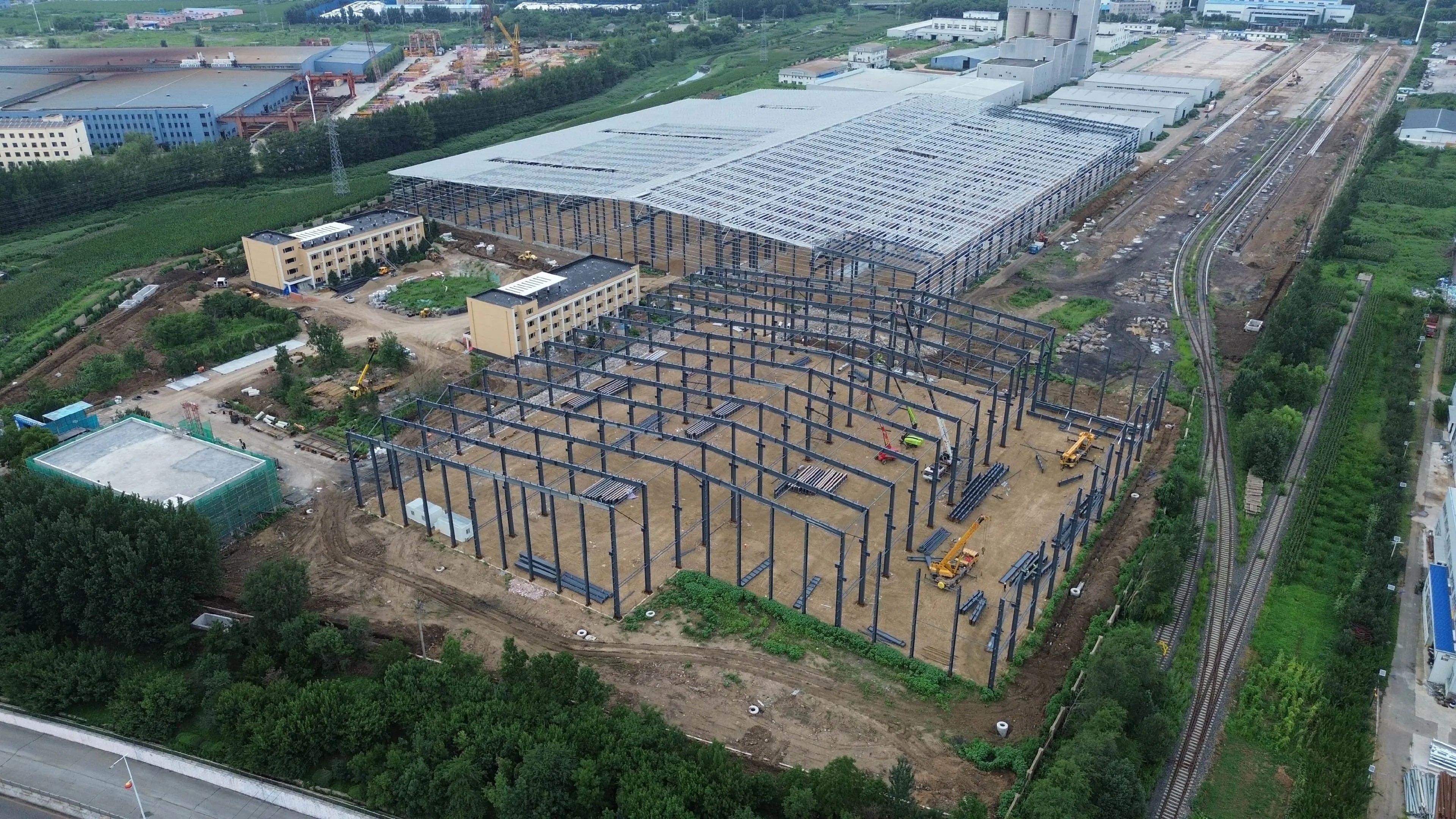
Before signing off on a steel structure warehouse plan, project managers must understand the technical, economic, and regulatory factors that influence long-term performance and cost-efficiency. From material grade selection to load-bearing design and supplier qualifications, every detail impacts safety, durability, and ROI. This guide helps decision-makers evaluate proposals more objectively and collaborate effectively with manufacturers like Shandong Yuegong Steel Structure Co., Ltd., ensuring a stable foundation for future operations.
Understanding the Core Elements of a Steel Structure Warehouse Plan
A steel structure warehouse plan typically includes five fundamental components: structural framework, envelope materials, foundation system, load-bearing analysis, and safety standards. Each element must comply with GB, ISO, or EN standards to guarantee structural integrity. The project manager should verify that all load ratings, including snow, wind, and seismic forces, fall within the 0.9–1.5 load coefficient range recommended by local code.
Material grade determination is another key factor. For instance, Q235B or Q355B steel is widely used for general span warehouses spanning 20–40 meters, while high-resilience steel such as Q460 is preferred for heavy-duty industrial applications requiring 10%–15% higher yield strength. A qualified partner like Shandong Yuegong Steel Structure Co., Ltd. integrates both light and heavy steel production lines across a 100,000㎡ base, ensuring precise control over every stage.
Decision-makers should also evaluate technical drawings at the pre-approval stage. Cross-section thickness (ranging from 4–14mm) directly affects cost and stability. Modeling software analysis (often using Tekla or PKPM) helps predict performance under continuous operation cycles of 20+ years.
Finally, assess how modular components, such as columns and purlins, are prefabricated. A reliable supplier will maintain dimensional precision within ±0.5mm, reducing onsite fitting time by up to 25% and saving both installation labor and project duration.
Key Evaluation Standards for Project Managers
Before approval, project managers must verify whether every critical criterion aligns with quality and safety benchmarks. The table below lists common evaluation standards used during pre-approval reviews of steel structure warehouse projects.
By establishing measurable review criteria like the above, project managers can align stakeholders such as design engineers, procurement teams, and contractors. This minimizes rework risk and ensures compliance with national standards like GB 50017-2017 for steel structures.
It’s equally important to evaluate coating specifications. A hot-dip galvanization thickness of 80–120μm or dual-layer epoxy paint with 200–300μm film improves corrosion resistance by 3–5 times, extending the maintenance interval from 2 years to about 7 years.
Shandong Yuegong Steel Structure Co., Ltd. adopts full-cycle quality tracking across material documentation, WPS welding qualification, and NDT inspection (covering 100% of primary joints). Such standardized management ensures consistency between design intent and field implementation.
Procurement and Cost Optimization Guidelines
Procurement for steel structure warehouses typically accounts for 60%–70% of the total project cost. Therefore, price evaluation must consider the life-cycle cost, not only the material tonnage rate. The key is to strike a balance between performance, durability, and maintenance frequency.
For example, a warehouse built with galvanized frames can cost 8%–12% more on materials but save up to 30% in corrosion-related repair expenses over 15 years. When combined with efficient accessories like the Stereo garage for optimized space usage, project ROI improves significantly in logistic or high-density industrial zones.
The following table summarizes a simplified cost comparison of structural material choices per ton of steel, based on regular market conditions in East China.
Reviewing these cost–benefit differences can lead to a more scientific procurement decision. Also, engaging suppliers early for structural optimization may reduce the amount of steel used per square meter from 45kg to 35kg in some standard workshops, representing an overall 15% material reduction.
When comparing vendor proposals, project managers should review not only unit price but also delivery cycle (normally 30–45 days for 3,000–5,000㎡ structures), logistics capability, and onsite assembly support. Companies like YG Steel Structure offer integrated logistics and erection supervision, minimizing cross-vendor coordination risks.
Compliance, Certification, and Risk Management
Compliance plays a vital role in structural steel procurement. Warehouse projects must meet national and regional safety standards, such as GB 50017, GB 50152, and ISO 9001 quality management certification. Project managers should confirm documentation before signing purchase orders.
Shandong Yuegong Steel Structure Co., Ltd. holds Class I Construction Qualification and Class A Design Certification, ensuring eligibility to handle complex industrial and municipal projects. Such qualifications typically require over 20 years of proven engineering experience and an annual output capacity exceeding 50,000 tons.
Risk control measures should cover four stages: design verification, production traceability, delivery inspection, and final load testing. Each phase includes checklist-based control points — for example, in production traceability, every 10 tons of steel should have heat number and test certificates archived for inspection.
To mitigate potential supply chain disruption, it is advisable to select manufacturers that keep at least a 15–20-day safety stock of main materials. YG Steel Structure applies ERP-based manufacturing scheduling, which reduces project delay probability by approximately 10%–12% compared with traditional batch management.
Frequently Asked Questions
1. What is the typical approval lead time for a steel structure warehouse plan?
For mid-scale industrial warehouses, the plan review and approval process usually take 2–4 weeks, assuming design documentation and structural calculations are complete. Project managers should allocate additional 7–10 days for regulatory verification or environmental assessment if required.
2. What are the main differences between light and heavy steel structure warehouses?
Light steel structures typically handle loads below 1.5 kN/m² and are suited for logistics or assembly lines. Heavy steel structures, designed for loads exceeding 3.0 kN/m², are applied in machineries or industrial plants. Companies like YG Steel Structure operate multiple production lines for both categories, ensuring flexibility for projects with mixed applications.
3. Is it feasible to integrate smart storage functions inside the warehouse?
Yes. Prefabricated modules can easily accommodate intelligent systems such as automated stacking, temperature sensors, and vertical lift storage units like the Stereo garage. Structural planning must allocate additional load margin (usually +10%) for dynamic load-bearing equipment.
4. How should maintenance cycles be scheduled?
General corrosion inspection should occur every 12 months, with comprehensive repainting every 5–7 years depending on coating condition. For coastal or chemical environments, reduce the cycle to every 3–5 years to maintain corrosion resistance and ensure structural safety.
Why Choose Shandong Yuegong Steel Structure Co., Ltd.
Selecting the right partner determines whether your project achieves both technical excellence and commercial efficiency. With more than two decades of deep industry expertise, YG Steel Structure provides end-to-end solutions — from layout optimization and design verification to component production, logistics, and onsite assembly support.
The company’s Class I Construction and Class A Design qualifications allow full compliance for large-scale industrial, public, and residential projects. Each year, YG delivers over 50,000 tons of customized steel components, maintaining traceable standards throughout design, fabrication, and delivery.
Project managers, procurement specialists, and decision-makers can contact YG Steel Structure for detailed technical consultation, including parameter confirmation, tailored component selection, timeline planning, and quotation evaluation. All inquiries receive engineering-backed recommendations aligned with your specific operational needs.
To ensure your next steel structure warehouse project meets both performance and budget targets, engage early with YG Steel Structure for design validation, customized optimization, and full compliance documentation support.
Related Posts
- ▶ Steel Structures: Meeting Client Demands with Precision
- ▶ What Project Managers Should Know Before Approving a Steel Structure Warehouse Plan
- ▶ Comparing Steel Structure Warehouses with Traditional Concrete Buildings in 2026
- ▶ How Energy Efficiency Is Changing the Future of Steel Structure Warehouse Design
- ▶ 5 Ways to Reduce Construction Time for Your Steel Structure Warehouse Project
- ▶ Is a Steel Structure Warehouse the Best Option for Cold Storage Facilities?
Send Us A Message