
Latest News
▲
Is a Steel Structure Warehouse the Best Option for Cold Storage Facilities?
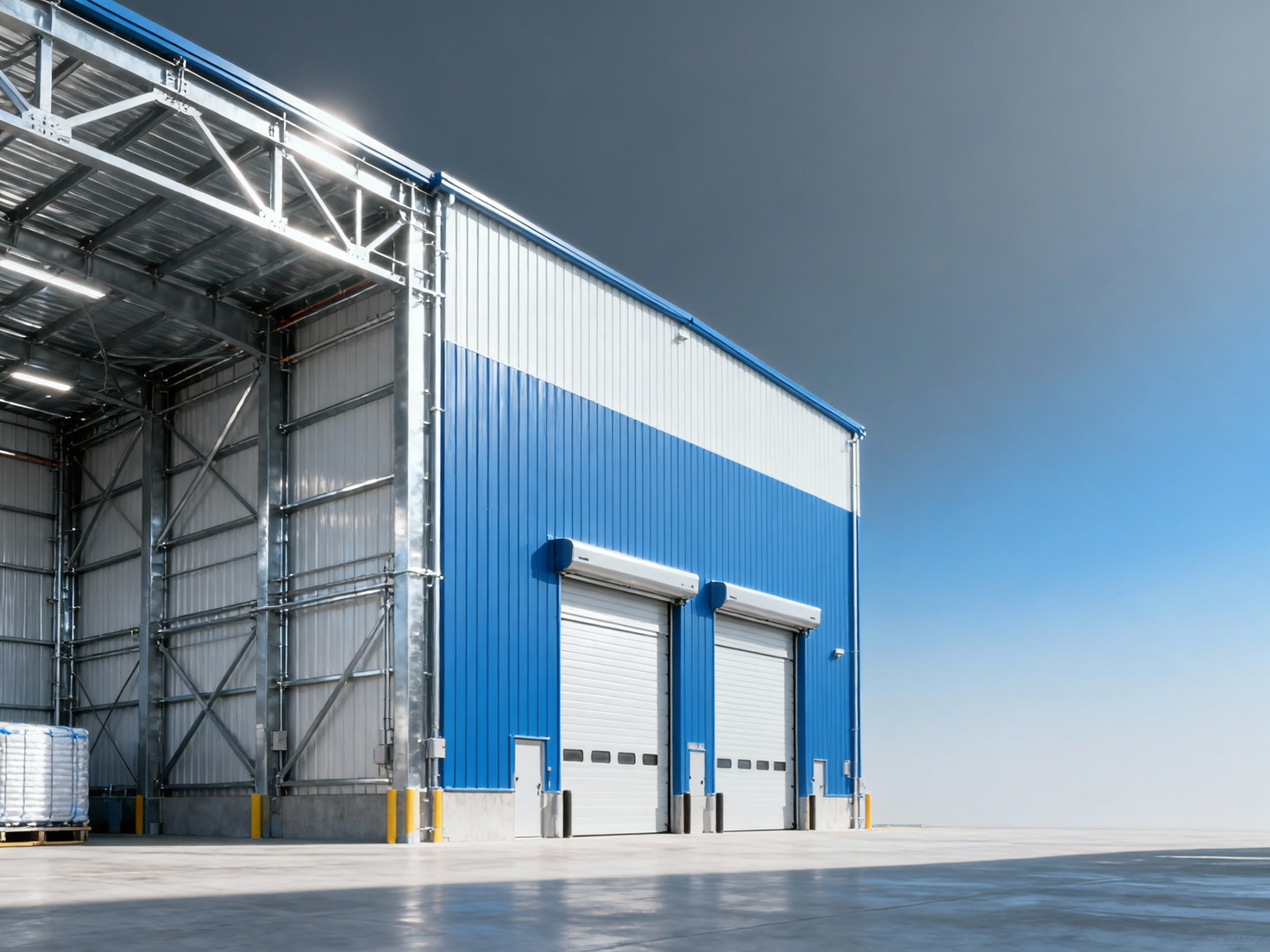
As demand for efficient and sustainable cold storage facilities continues to rise, choosing the right building solution becomes crucial. A steel structure warehouse offers exceptional durability, thermal efficiency, and design flexibility—key factors that influence long-term performance and operating costs. For decision-makers seeking a reliable, cost-effective, and future-oriented option, exploring the advantages of steel structures could be the first step toward optimizing cold storage operations.
Understanding the Needs of Modern Cold Storage Facilities
Cold storage facilities operate under a narrow temperature range—typically between -25℃ and +5℃—depending on the product type, whether it is frozen goods, pharmaceuticals, or fresh produce. Architectural performance directly impacts temperature stability, energy efficiency, and long-term maintenance costs.
In this context, structural materials must ensure precise thermal insulation and moisture control. Traditional concrete buildings, though robust, often struggle to minimize thermal bridging and condensation, particularly over periods longer than 10 years of high-load operation. Steel structures, by contrast, leverage advanced panel insulation systems and pre-engineered fabrication technology to achieve consistent thermal performance with tolerances as low as ±0.5℃ in temperature deviation.
From procurement and construction to operational maintenance, every stage of a cold storage project requires alignment between structural systems and refrigeration technology. This is where specialist manufacturers like Shandong Yuegong Steel Structure Co., Ltd. (YG Steel Structure) offer a competitive edge: they integrate design, production, and installation under a unified engineering system, reducing cross-team communication losses by more than 20% compared to traditional design–build separations.
Moreover, with project delivery cycles now averaging between 60–90 days in the industrial warehouse segment, the modularity and fast assembly of steel structures offer tangible advantages, ensuring minimum downtime and streamlined commissioning schedules for perishable-goods clients.
Comparing Steel Structure Warehouses and Conventional Building Options
The decision between a steel structure cold storage warehouse and a reinforced concrete or brick building often revolves around five procurement dimensions: investment cost, energy performance, construction timeline, adaptability, and compliance lifespan. The following table summarizes the core contrasts typically observed across industrial projects of 2,000–10,000㎡.
According to industry-specific lifecycle analyses, the total cost of ownership for a steel structure warehouse is typically 15–25% lower across a 20-year operation. The shorter assembly timeline allows faster commissioning, while modular prefabrication reduces onsite safety incidents by around 30%.
In addition, when paired with structural accessories like a Steel structure landscape bridge, enterprises can extend architectural consistency and steel performance across site interconnections, enhancing operational logistics efficiency.
Key Technical Features and Performance Parameters
Steel structure warehouses for cold storage are engineered with detail precision that meets national Class I construction standards. The frame components—columns, beams, bracing systems—are typically fabricated from Q345B or Q390 steel, with load capacities ranging from 200kN to 800kN per axis depending on span width. This ensures sufficient strength for multi-level racking or automated storage systems operating in low-temperature environments of -20℃ and below.
Thermal insulation is usually implemented through sandwich panels using polyurethane (PU) or polyisocyanurate (PIR), achieving heat transfer coefficients of 0.016–0.022 W/(m·K). Seam-sealing methods reduce air leakage to less than 2.0 m³/(h·m²) under a pressure differential of 50 Pa. Such parameters directly influence power consumption for refrigeration—potentially optimizing energy costs by 10–18% annually.
YG Steel Structure’s 100,000㎡ production base ensures large-batch component consistency and precision-controlled fittings. Each structural unit undergoes dimensional inspection within ±2 mm and anti-corrosion treatment cycles exceeding 3,000 hours of salt-spray testing. These standards align with GB50017 and ISO 9001 quality management systems.
Typical Component Breakdown
These configuration benchmarks allow project managers to tailor their cold storage warehouse to loads, span width, and insulation requirements while maintaining construction repeatability across multiple sites.
Procurement and Construction Considerations
When evaluating suppliers for steel structure cold storage projects, procurement professionals should examine three critical dimensions: compliance certification, production capacity, and technical integration proficiency. YG Steel Structure holds Class I Construction and Class A Design certifications in China, authorizing comprehensive engineering design and manufacturing execution within the industrial building domain.
A systematic procurement checklist typically includes:
- Verification of structural load calculations according to GB50009 and GB50017 standards.
- Assessment of anti-corrosion and fire protection coatings with rated durations of ≥1.5 hours on core elements.
- Inspection of insulation sealing details ensuring water permeability rates below 2% under 96-hour tests.
- Review of prefabrication records confirming 100% traceability of weld data and batch material certificates.
- Clarification of installation and inspection cycles, typically spanning 3–4 sequential stages (foundation, frame erection, panel assembly, system integration).
To enhance structural coordination across site layouts, enterprises can consider integrated accessory products such as a Steel structure landscape bridge, which complements warehouse structures in both material uniformity and environmental resilience.
Frequently Asked Questions (FAQ)
How long does it take to build a steel structure cold storage warehouse?
Most medium-size cold storage facilities between 3,000–6,000㎡ require around 8–12 weeks from foundation to commissioning when prefabricated by an integrated supplier like YG Steel Structure. This timeframe can be optimized further under unified EPC management.
Is steel suitable for high-humidity or coastal environments?
Yes. By applying hot-dip galvanization and epoxy coatings exceeding 120 μm, steel frames achieve corrosion resistance suitable for coastal humidity exceeding 85%, maintaining stability for service cycles beyond 25 years with minimal upkeep.
Can steel structure warehouses support automated storage systems?
Modern steel structures are specifically designed to integrate with AS/RS equipment and multi-tier racking systems bearing loads up to 30 tons per level. The precision of modular spans allows efficient layout of robotic retrieval systems without structural interference.
What are common maintenance requirements?
Routine inspection every 24 months is recommended, focusing on corrosion points, panel joins, and insulation integrity. Full coating renewal may be required after 10–12 years, based on environmental exposure levels.
Why Choose YG Steel Structure for Your Cold Storage Facility?
With over 20 years of specialization in structural steel manufacturing, Shandong Yuegong Steel Structure Co., Ltd. delivers end-to-end solutions from Class A design, Class I construction qualification, to precision fabrication across its 100,000㎡ facility. The company’s annual production capacity of 50,000 tons ensures flexible scalability for multi-project clients.
From early-stage design consultation and structural simulation to material procurement and onsite engineering, YG Steel Structure executes a comprehensive 4-phase delivery framework—ensuring accurate parameter alignment and reduced deviation risk at each stage. For procurement teams, this means measurable reliability and predictability in both schedule and cost performance.
To discuss your cold storage project in detail—covering structural configuration, insulation parameters, cost optimization strategies, and certification compliance—contact YG Steel Structure’s technical consulting team. They provide customized design mock-ups, quotation evaluations within 3–5 working days, and end-to-end implementation support tailored to your industry and operational requirements.
Related Posts
- ▶ Steel Structures: Meeting Client Demands with Precision
- ▶ What Project Managers Should Know Before Approving a Steel Structure Warehouse Plan
- ▶ Comparing Steel Structure Warehouses with Traditional Concrete Buildings in 2026
- ▶ How Energy Efficiency Is Changing the Future of Steel Structure Warehouse Design
- ▶ 5 Ways to Reduce Construction Time for Your Steel Structure Warehouse Project
- ▶ Is a Steel Structure Warehouse the Best Option for Cold Storage Facilities?
Send Us A Message