
Latest News
▲
What a Steel Structure Warehouse Is and Why It Matters for Industrial Projects
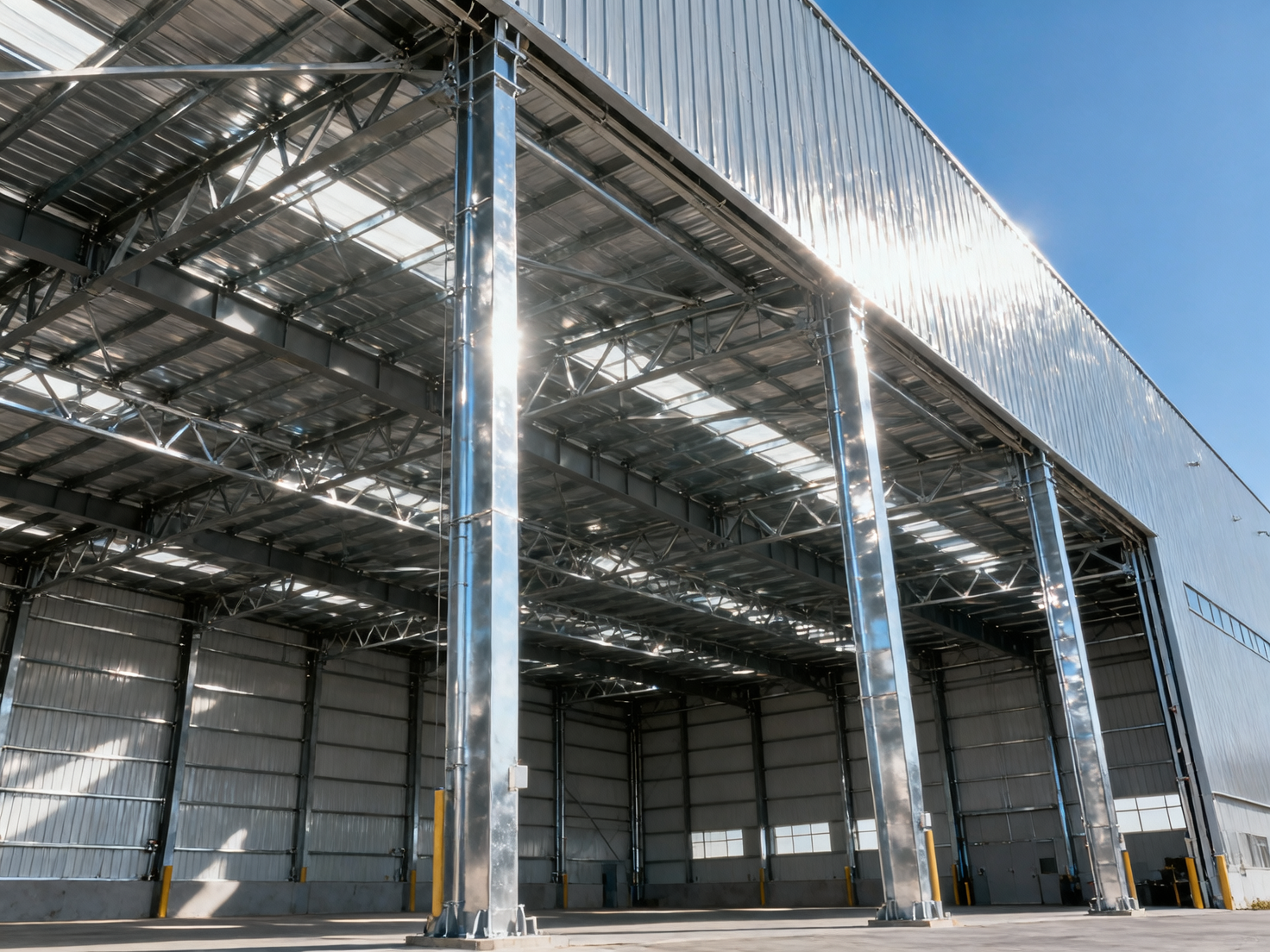
A steel structure warehouse is more than just a storage facility—it’s a core asset that supports efficiency, durability, and cost-effectiveness in industrial projects. For procurement specialists, corporate decision-makers, and project managers, understanding its structural advantages and design flexibility is essential. With decades of experience, YG Steel Structure demonstrates how advanced steel engineering can transform logistics and production spaces into long-term strategic investments.
Understanding What a Steel Structure Warehouse Is
A steel structure warehouse refers to a prefabricated building composed of load-bearing steel components such as columns, beams, and trusses. Unlike traditional concrete structures, it relies on high-strength steel frames that can handle distributed loads of 1.5–3.0 kN/m², depending on the facility type. This structural form is favored in manufacturing, logistics, and e-commerce sectors for its speed of assembly and long service life.
YG Steel Structure, based in Jinan, Shandong Province, has been designing and manufacturing such steel systems for over 20 years. The company maintains an annual production capacity of 50,000 tons of steel components and operates multiple light and heavy production lines within a 100,000㎡ industrial base. Every warehouse framework is engineered with precision tolerances of ±0.5 mm to ensure alignment, load stability, and safety.
In modern industrial construction, design modularity allows warehouses to range in span from 12 to 60 meters and height from 6 to 24 meters without intermediate columns. This frees up interior space for automated racking systems or multifunctional equipment zones. Moreover, prefabricated steel units enable an average erection period of just 20–30 days, which can significantly reduce project delays.
The robustness of such structures also supports weather resistance and low maintenance requirements. With surface treatments like hot-dip galvanizing and epoxy paint coatings rated for 15–25 years of corrosion protection, enterprises can minimize lifecycle costs while ensuring consistent structural integrity.
Key Industrial Advantages and Structural Performance
The appeal of steel structure warehouses lies in their combination of strength, flexibility, and sustainability. From a mechanical performance perspective, structural steel delivers a yield strength in the range of 345–460 MPa, providing substantial stability under dynamic loads. Engineers often deploy high-tensile Q355 or Q460 grade materials for main trusses, optimizing performance-to-weight ratios.
For industrial decision-makers, this translates into tangible efficiency. Steel frameworks allow up to 30% material savings compared to conventional reinforced concrete and reduce foundation loads by 20–40%. This is especially advantageous where land bearing capacity or soil composition limits heavy foundation systems. YG Steel Structure enhances these features using advanced welding and modular fabrication methods certified under China’s Class I Construction Qualification.
Additionally, energy efficiency is integrated into the warehouse envelope through insulated panels, skylights, and natural ventilation systems, ensuring comfort across temperature ranges from –20°C to +45°C for year-round operations. When combined with products like the Special Space Frame, even large-span roofs achieve both aesthetic uniformity and dependable load capacity without excessive support members.
Steel systems are also fully compliant with national standards including GB50017 and GB50009, guaranteeing wind load, snow load, and seismic resistance performance levels suitable for regions with intensities up to 8 degrees. It ensures safety and compliance—two performance indicators procurement teams consistently oversee in industrial projects.
Performance Parameters Comparison
The table below summarizes how steel structure warehouses outperform traditional construction in key dimensions of strength, cost, and schedule:
From this data, it becomes clear that steel warehouses can cut project schedules by up to 60% and save around 20% in total construction costs due to lower labor and faster installation cycles. These advantages strengthen the case for industries seeking agility and cost control in their infrastructure expansions.
Procurement and Design Decision Factors
When procurement professionals evaluate warehouse suppliers, several measurable indicators guide their decision. These include design qualification level, customization capability, production capacity, and on-time delivery rate. YG Steel Structure’s design certification at Class A level ensures that architectural design and structural computations adhere to top-tier precision standards.
Buyers should assess structural configuration and application fit across 3 main categories:
- Light-duty warehouses for storage or small factories (span ≤ 24m)
- Medium-duty production plants (span 24–36m, height 12–18m)
- Heavy-industrial logistics or integrated workshops with large spans up to 60m
Other parameters such as surface treatment grade, fire rating, and insulation layer thickness (commonly 50–100 mm) should be factored into raw material selection. Steel coatings can offer zinc layers of 80–120 g/m², extending durability in coastal or humid zones. In addition, tight schedule projects may prefer prefabricated subassemblies delivered ready for onsite bolting.
To optimize these decisions, YG Steel Structure offers digital design tools and 3D modeling incorporated into its internal BIM workflow, enabling early clash detection and efficiency in fabrication sequencing. Integration with large-span components such as the Special Space Frame allows customized architectural profiles without structural compromise.
Evaluation Matrix for Buyers
The following table outlines practical evaluation criteria procurement teams often apply:
By applying structured metrics like these, buyers can compare multiple suppliers effectively and mitigate risks of delay, misalignment, or overbudgeting early in their planning process.
Common Misconceptions About Steel Structure Warehouses
Despite their widespread use, misconceptions persist in the field of industrial facility planning. One frequent belief is that steel construction lacks thermal performance. However, modern panelized systems integrate polyurethane insulation with U-values below 0.35 W/m²·K, meeting national energy-saving standards. Another myth is that steel frameworks are hard to maintain; in reality, they require only annual inspections and minor coating touch-ups once every 8–10 years.
Another misunderstanding lies in the assumption that steel warehouses cannot support multistory layouts. Using composite floor systems, engineers can design two or three floors supporting live loads of 3–5 kN/m², optimizing vertical land use where real estate costs are high.
Concerns over seismic performance are also outdated. Advanced design codes now allow damping systems and flexible connections enabling steel warehouses to withstand lateral accelerations up to 0.3g, far exceeding concrete standards in similar categories.
In practice, understanding and correcting these perceptions help procurement and project teams align expectations with real-world data and ensure better cost allocation across the 25–35 year lifespan typical of steel-built assets.
Why Partner with YG Steel Structure
Choosing YG Steel Structure brings together expertise, scale, and certified quality. The company operates comprehensive production workflows—from design and modeling to manufacturing and on-site assembly—ensuring consistency through every project phase. Its 20+ years of practical experience in industrial buildings, public facilities, and municipal bridges underline its reputation in China’s professional steel construction sector.
Procurement managers benefit from predictable delivery cycles averaging 25–35 working days, flexible customization for span and load conditions, and dedicated technical consultation covering design, material selection, and environmental compliance. YG Steel Structure’s membership in the China Steel Construction Society ensures it remains at the forefront of design innovation and standard integration.
Whether your goal is to confirm structural parameters, review cost efficiency strategies, or discuss turnkey installation options, collaborating with YG Steel Structure guarantees access to Class A certified engineering resources and industrial-grade manufacturing capacity. Reach out now to explore customized warehouse solutions tailored to your load requirements, delivery schedule, and project budget objectives.
Contact YG Steel Structure’s professional engineering team to initiate detailed parameter confirmation, request sample design schemes, or evaluate how steel-based structures can transform your next facility expansion into a resilient, scalable, and sustainable asset.
Related Posts
- ▶ Steel Structures: Meeting Client Demands with Precision
- ▶ What Project Managers Should Know Before Approving a Steel Structure Warehouse Plan
- ▶ Comparing Steel Structure Warehouses with Traditional Concrete Buildings in 2026
- ▶ How Energy Efficiency Is Changing the Future of Steel Structure Warehouse Design
- ▶ 5 Ways to Reduce Construction Time for Your Steel Structure Warehouse Project
- ▶ Is a Steel Structure Warehouse the Best Option for Cold Storage Facilities?
Send Us A Message