
Latest News
▲
Why More Manufacturing Companies Are Investing in Steel Structure Warehouses
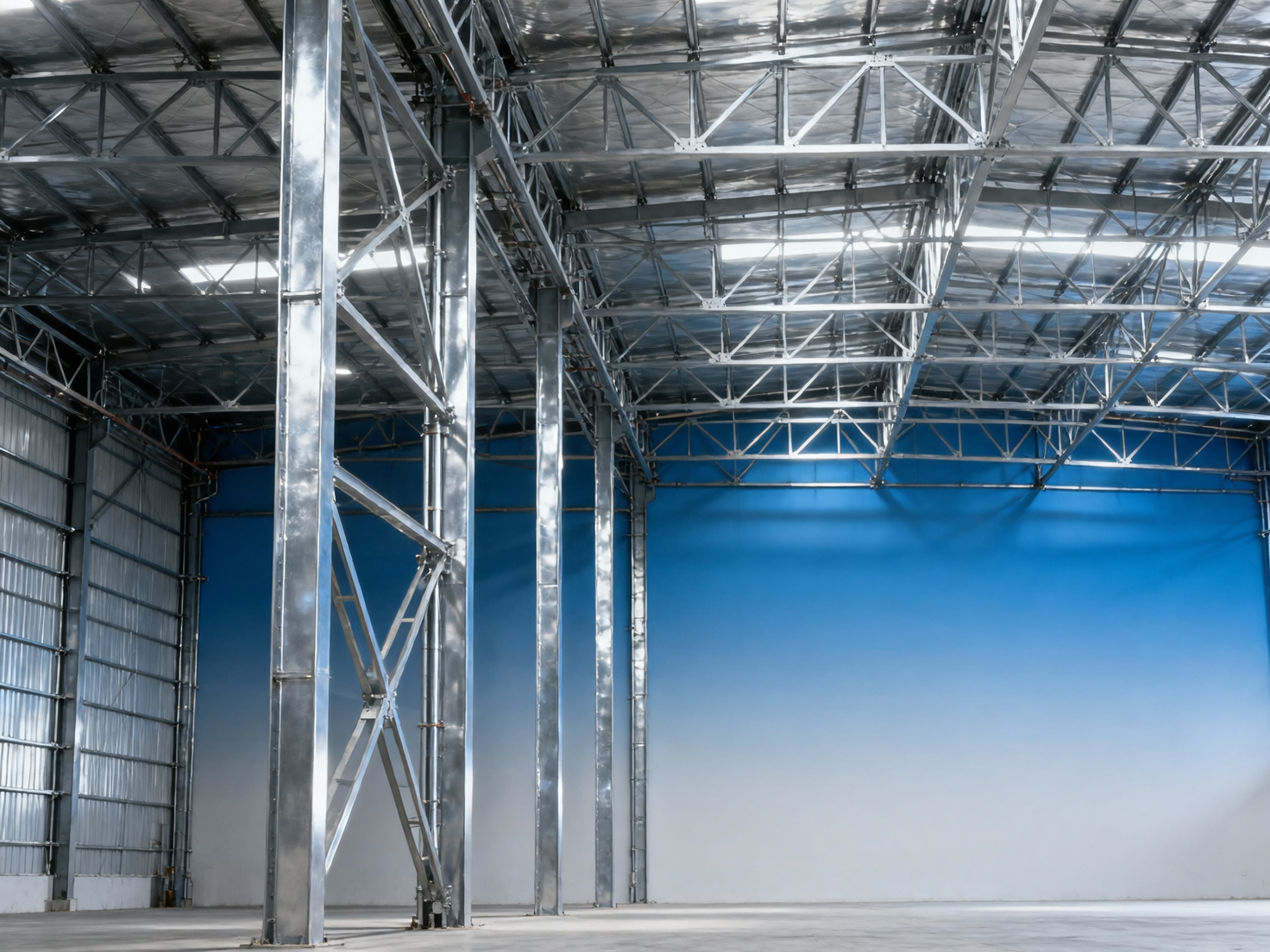
As global supply chains evolve and efficiency demands rise, more manufacturers are turning to the durability and flexibility of the steel structure warehouse. Combining rapid construction, cost savings, and long-term resilience, these advanced facilities have become the preferred choice for future-ready operations. With the backing of industry leaders like Shandong Yuegong Steel Structure Co., Ltd. (YG Steel Structure), companies can leverage innovative steel solutions to enhance productivity and optimize space utilization.
Understanding the Shift: Why Steel Structure Warehouses Are Gaining Ground
The global manufacturing landscape is undergoing a transformation driven by the rapid growth of e-commerce, automation, and just-in-time logistics. Traditional concrete warehouses often fail to meet the agility and scalability requirements of this new era. In comparison, steel structure warehouses provide a balance between structural integrity and construction speed, offering a typical delivery cycle of 60–90 days depending on project scale.
Steel structures are not only lighter but also offer higher load-bearing ratios—often achieving strength-to-weight improvements of 30–40% compared to conventional reinforced concrete. This allows for larger spans without interior columns, increasing usable storage area by around 5–10%. For manufacturers managing thousands of pallets or heavy production equipment, this spatial efficiency translates directly into lower operational costs and simplified layout planning.
Besides cost and time advantages, sustainability is another key factor. Modern steel warehouses are designed with recyclability rates exceeding 90%, aligning with the global push toward green construction standards such as ISO 14001 and LEED. As environmental regulations tighten, steel buildings provide a compliant and future-ready solution for medium to large-sized operations.
YG Steel Structure, headquartered in Jinan, Shandong Province, has continuously advanced steel processing technologies and automated production lines. With a 100,000㎡ base and annual output capacity of 50,000 tons, the company delivers standardized yet customizable warehouse systems that meet diverse requirements—from high-bay storage solutions to temperature-controlled facilities.
Key Comparative Advantages
The following table summarizes the primary differences between steel and concrete warehouse structures often considered by corporate decision-makers:
These benchmarks illustrate that steel solutions deliver faster ROI within 12–18 months for most mid-scale facilities, a critical factor for project managers and financial officers tasked with optimizing investment cycles.
Core Applications Across the Manufacturing Industry
Steel structure warehouses have proven adaptability across various industrial sectors. In heavy manufacturing, high-strength columns and girders can support gantry cranes ranging from 5 tons to 50 tons. For light manufacturing or electronics, the same framework can integrate insulation panels maintaining internal temperatures between 10°C and 25°C, ensuring product quality consistency.
Automotive component suppliers, textile mills, and chemical producers increasingly prefer modular steel design due to its flexible layout that allows later expansion without interrupting workflow. Statistics show that over 40% of industrial warehouse expansion projects now incorporate prefabricated steel modules for scalability and lower downtime during upgrades.
An example application from YG Steel Structure’s product line is the Museum Steel Structure , designed with customized load-bearing configurations suitable for exhibition halls or high-clearance storage. Such systems demonstrate the company’s capability to translate architectural design requirements into industrial-grade performance.
Beyond warehouse use, steel frames are utilized in offices, logistics centers, and even bridges—reflecting the diverse competency of YG Steel Structure. The same engineering principles are applied to municipal projects, ensuring quality, safety, and reliability throughout the construction life cycle.
Typical Application Categories
- High-bay manufacturing warehouses (9–15 m vertical clearance)
- Logistics and distribution centers (rapid loading docks & automated racks)
- Cold-chain storage facilities (temperature range −20°C to 10°C)
- Precision assembly workshops (low vibration floor systems)
Each application demands tailored configurations in terms of wind resistance—often designed for pressures up to 0.7 kPa—and seismic performance reaching Level 8 of China's GB50011 standard. This flexibility underscores the engineering depth inherent in steel system design.
Procurement and Design Considerations for Decision-Makers
For procurement officers and project managers, ensuring proper alignment between operational requirements and structural specifications is crucial. The best outcomes occur when design consultation begins during the concept phase, typically 2–4 weeks before final budgeting. YG Steel Structure provides pre-design consultation to assess layout efficiency, load distribution, and local climate conditions.
To assist buyers, below is a summary table of procurement evaluation criteria often used in selecting steel structure suppliers in the building materials industry.
Selecting suppliers with national certifications such as Class I Construction Qualification ensures compliance and minimizes project risk. YG Steel Structure holds both Class I Construction and Class A Design licenses, guaranteeing engineering accuracy across multiple industrial facility types.
Three-Step Evaluation for Buyers
- Define functional requirements—storage density, crane load, and expansion potential.
- Verify supplier credentials—production capacity, quality certifications, and reference projects.
- Request preliminary design and cost comparison within 7–15 days for feasibility analysis.
Following these structured steps helps decision-makers reduce change orders by roughly 20–25% during the construction stage, safeguarding budget allocation and delivery timelines.
Future Trends and Industrial Outlook
Going forward, steel structure warehouses will continue evolving alongside digital building management systems. Integration of BIM (Building Information Modeling) and sensor networks allows real-time monitoring of humidity, temperature, and load distribution with accuracy up to ±0.5 mm in deformation detection. These capabilities enhance maintenance scheduling and ensure compliance with structural safety standards over 30+ years of service life.
Additionally, the trend toward hybrid structures—combining steel frames with photovoltaic roofing panels—is gaining traction. This integration can produce 10–20% of a facility’s annual energy consumption, aligning with corporate sustainability goals and lowering operational expenses.
YG Steel Structure continues to invest in automation and precision machining. By integrating robotic welding and CNC cutting technology toleranced at ±1 mm, the company ensures consistency across large-scale production runs. Projects using modular components such as the Museum Steel Structure embody the next evolution of prefabrication efficiency and aesthetic versatility.
In the coming 5–10 years, experts expect steel structure demand in industrial warehouses across Asia-Pacific to grow at a compound annual rate between 6% and 8%. As land and labor costs rise, speed-to-market and facility adaptability will remain core purchasing criteria among manufacturers.
Why Partner with YG Steel Structure
Shandong Yuegong Steel Structure Co., Ltd. stands as a comprehensive partner for enterprises seeking advanced steel structure solutions. With over 20 years of design and manufacturing expertise, its technical team delivers end-to-end support—from structural optimization and load simulations to on-site installation and maintenance training. The company’s membership in the China Steel Construction Society further ensures compliance with industry standards and promotes innovation alignment.
Decision-makers can engage YG Steel Structure to confirm key parameters such as seismic grade, wind resistance, paint systems, and coating lifespans. The firm’s project management framework includes four standard milestones: design approval, fabrication (averaging 30 days), shipment arrangement (7–10 days), and on-site assembly (20–35 days depending on weather and foundation readiness).
By consulting the company’s engineering team early, clients can receive detailed drawings, custom material lists, and accurate quotations within a 10-working-day period. Whether upgrading existing facilities or building new industrial space, YG Steel Structure provides a technically reliable, economically efficient, and environmentally responsible path forward.
Contact YG Steel Structure today to discuss customized steel warehouse configurations, verify compliance requirements, or schedule a design feasibility assessment. Experience how professional engineering and decades of expertise can transform procurement decisions into long-term competitive advantage.
Related Posts
- ▶ Steel Structures: Meeting Client Demands with Precision
- ▶ What Project Managers Should Know Before Approving a Steel Structure Warehouse Plan
- ▶ Comparing Steel Structure Warehouses with Traditional Concrete Buildings in 2026
- ▶ How Energy Efficiency Is Changing the Future of Steel Structure Warehouse Design
- ▶ 5 Ways to Reduce Construction Time for Your Steel Structure Warehouse Project
- ▶ Is a Steel Structure Warehouse the Best Option for Cold Storage Facilities?
Send Us A Message