
Latest News
▲
5 Key Technical Indicators to Assess Before Purchasing a Steel Structure Workshop
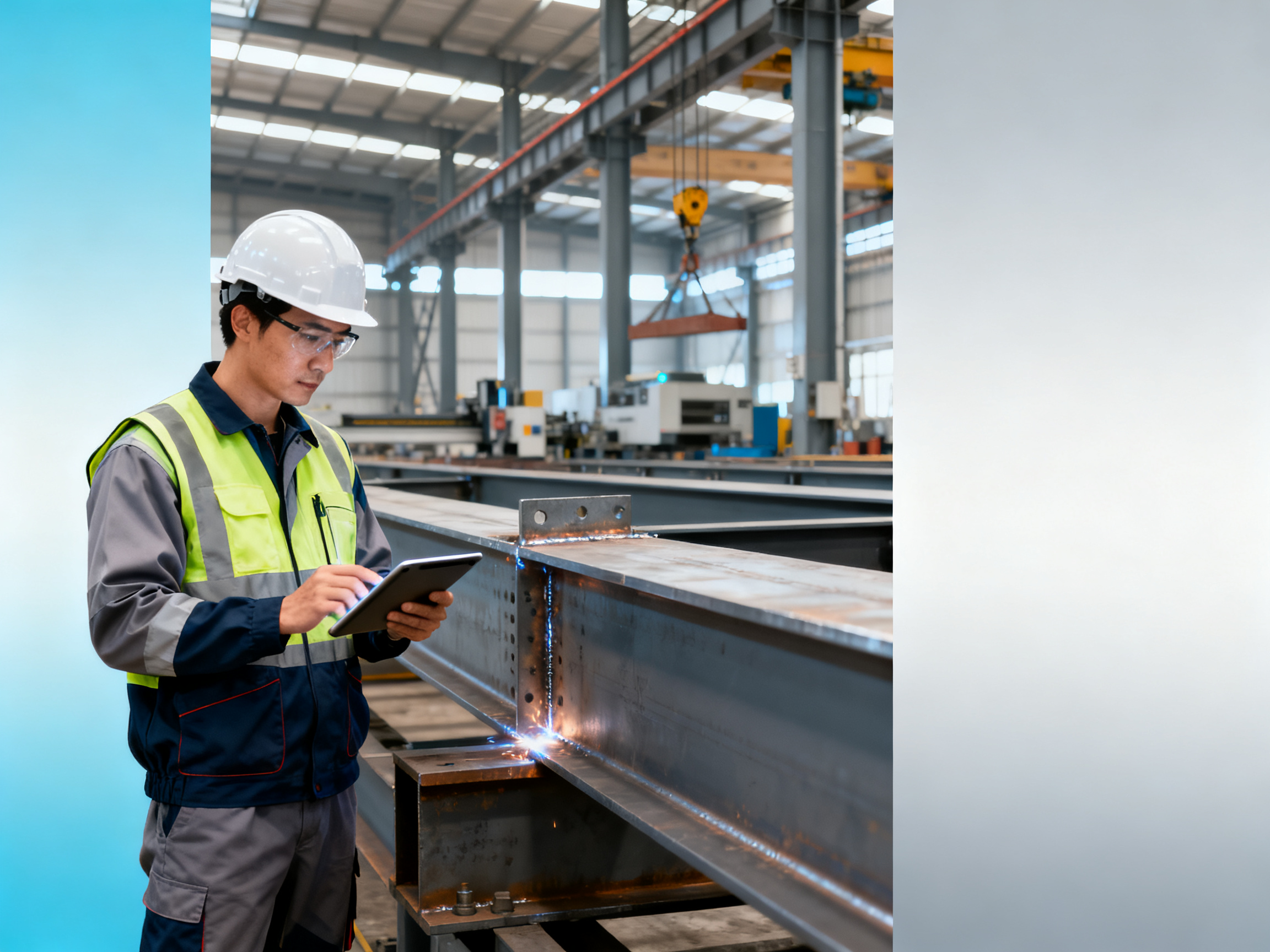
Before investing in a steel structure workshop, understanding key technical indicators is essential to ensure cost-efficiency, durability, and long-term value. With expertise from YG Steel Structure—an industry leader in steel design and manufacturing—this guide highlights five critical parameters that procurement officers, technical evaluators, and business decision‑makers should assess to make informed and reliable choices for their construction projects. A properly designed steel structure workshop integrates precision-engineered components and quality control that directly influence operational performance, lifecycle cost, and structural resilience under diverse environmental loads. These factors are particularly relevant for projects involving industrial manufacturing, logistics warehousing, and specialized production applications where durability, safety, and efficiency define competitiveness. In essence, a comprehensive technical evaluation framework empowers decision-makers to balance performance and financial investment, ultimately ensuring every square meter of steel delivers measurable returns for decades to come.
Definition and Key Technical Indicators Explained
A steel structure workshop comprises prefabricated steel columns, beams, trusses, and connection nodes fabricated with industrial precision. In evaluating such systems, five technical indicators dominate: material grade and strength ratio, design load‑bearing capacity, welding and bolting accuracy, surface treatment for corrosion protection, and compliance with international fabrication standards like GB/T 50661 or ISO 9001. For YG Steel Structure—headquartered in Jinan, Shandong Province—maintaining these criteria is standard practice across its 100,000㎡ manufacturing base. Each production line, from light to heavy steel, follows a digitized control process that ensures conformity in geometry, weld integrity, and coating performance. Technical evaluators should particularly examine yield strength of Q235 or Q345 steel, weld penetration depth, and anti-corrosion layer thickness exceeding 75μm in hot-dip galvanizing treatments. Moreover, finite element modeling (FEM) can verify structural efficiency before fabrication, minimizing deformation risks during assembly. Every steel structure workshop benefits from consistent adherence to these defining indicators, contributing to long-term stability and reduced maintenance costs.
Market Overview and Industry Trends
The global demand for steel structure workshops has grown rapidly as construction industries embrace prefabrication, sustainability, and faster delivery cycles. According to several construction market surveys, prefabricated metal buildings now account for nearly 40% of newly constructed industrial facilities. This shift is driven by improved structural reliability, cost control, and responsiveness to diverse functional needs—from logistics depots to automated farming facilities such as the chicken poultry Egg-laying chicken breeding factory building. Shandong Yuegong Steel Structure Co., Ltd. has adapted to these developments by expanding its heavy-duty production capacity to 50,000 tons per year, integrating robotic welding systems and digital quality management to boost manufacturing repeatability. For procurement professionals, understanding these market shifts means recognizing why the steel structure workshop remains the backbone of cost-efficient industrial architecture. Emerging trends—like smart steel monitoring sensors and AI-assisted structural diagnostics—are adding analytical precision to maintenance cycles, ensuring that each investment remains productive throughout its intended life span.
Technical Performance and Comparative Advantages
When assessing technical performance, focus must extend beyond tensile strength alone. A holistic benchmark compares structural reliability under dynamic loads, energy efficiency, fire resistance, and ease of onsite assembly. Against traditional concrete structures, a steel structure workshop provides 30% faster project completion time, 20% lower foundation load, and much higher recyclability. YG Steel Structure enhances these advantages by applying advanced surface treatments and corrosion-protection painting lines designed to meet marine-grade durability standards. Comparative studies indicate that welded H-beams and portal frames produced through high-precision CNC systems demonstrate ±1 mm assembly tolerance, drastically minimizing installation errors. In addition, adopting seismic-resistant design frameworks embodies better dynamic stability for projects located along China’s seismically active regions. Practical benchmarking also incorporates lifecycle costing: a technically optimized steel structure workshop may reduce 15% of maintenance cost annually compared with cheaper, non-standard systems. Thus, for decision-makers, evaluating performance variables ensures every ton of steel meets both project specifications and operational longevity expectations.
Procurement and Selection Guidelines
Procurement officers and business evaluators face multiple priorities: balancing budget control, construction schedule, compliance assurance, and long-term asset value. To conduct precise evaluation, they should establish a scoring framework aligned to international standards. Essential procurement criteria include: 1) certification verification such as China’s Class I Construction Qualification and Class A Steel Structure Design Certification; 2) factory production audits to assess welding accreditation, testing instruments, and coating facilities; 3) evaluation of quality documentation, including mill test reports and third-party inspection results; 4) structured timeline assessment, covering prefabrication, logistics, and onsite installation. Shandong Yuegong Steel Structure Co., Ltd. meets each of these selection benchmarks through consistent transparency, traceable batch coding, and digital tracking for all delivered components. A strategically sourced steel structure workshop therefore secures long-term risk reduction. For specialized agriculture or manufacturing applications, integrating function-specific layouts—like the efficient modular design of a chicken poultry Egg-laying chicken breeding factory building—further amplifies operational flexibility and ensures regulatory compliance for hygiene and safety.
Cost, Sustainability, and Alternative Considerations
A key metric in steel structure investment is the cost-to-performance ratio. While upfront costs might appear higher than reinforced concrete, lifecycle analysis demonstrates superior economic sustainability. Steel structures allow easy expansion, relocation, or dismantling, aligning perfectly with circular economy principles. Maintenance cost savings arise from well-treated anti-corrosion coatings and modular replacement design. Furthermore, steel is 100% recyclable, enabling companies to recover scrap value at end-of-life stages. For cost analysts, evaluating total ownership cost rather than mere purchase cost provides a more accurate financial insight. YG Steel Structure’s optimized fabrication lines permit bulk procurement advantages and reduce wastage by deploying intelligent cutting patterns. The result is both ecological and financial efficiency. In addition, hybrid alternatives—combining insulated sandwich panels with H-beam frameworks—achieve higher energy conservation rating, which is particularly relevant for climate-controlled production facilities. These sustainable design solutions, backed by certified environmental management systems, make each steel structure workshop an investment in both productivity and environmental stewardship.
Case Studies and Applications
Practical case studies highlight measurable outcomes. One municipal bridge project engineered by YG Steel Structure achieved 25% reduction in assembly time compared with traditional contractors, thanks to precision prefabrication. Another commercial warehouse in Southeast Asia demonstrated near-zero onsite error margins during erection due to the company’s digital model-driven design system. Industrial users often cite repeatability and durability as primary advantages of adopting standardized steel frameworks. In agriculture, prefabricated designs are especially vital. For instance, a regional egg-laying facility applied integrated ventilation and thermal insulation technologies within its steel framework, ensuring steady temperature control vital for poultry health. This showcases how versatile engineering transforms concepts into productive assets. Therefore, whether establishing a logistics hub, a public building, or specialized manufacturing base, the steel structure workshop remains the most technically and economically viable solution for modern enterprises worldwide.
Frequently Asked Questions (FAQ) and Misconceptions
One common question among procurement specialists is whether steel structures compromise fire safety compared with concrete. Properly fireproofed steel components—coated with certified intumescent paints—can reach over 2 hours of fire resistance, fulfilling NFPA and GB50016 standards. Another misconception concerns maintenance difficulty; when using galvanization and quality coatings, minimal structural maintenance is required beyond periodic inspection. Buyers also wonder about installation complexity. Modern modular systems ensure rapid assembly using bolted connections, requiring less heavy machinery on site. Finally, regarding long-term depreciation, empirical data reveals that a well-maintained steel structure workshop retains over 80% of its functional value after 25 years, surpassing equivalent concrete assets. Clarifying these misunderstandings allows evaluators to base their decisions on engineering performance rather than outdated assumptions, reinforcing the overall practicality of modern steel structure solutions provided by established manufacturers like Shandong Yuegong Steel Structure Co., Ltd.
Standards, Certification, and Compliance
Conformance to international and domestic standards forms the backbone of safe steel construction. YG Steel Structure holds both Class I Construction Qualification and Class A Design Certification, ensuring full legal compliance across large industrial projects. Testing procedures adhere to GB/T 700 standards for carbon-structural steel and ISO 12944 for corrosion protection. Ultrasonic testing (UT) and radiographic inspection (RT) confirm weld integrity, while dimensional tolerances align with GB/T 19804 for steel fabrications. For overseas clients, conformity documentation including CE marking or AISC compliance can be arranged. Procurement personnel should verify these certificates to confirm that each steel structure workshop satisfies environmental, safety, and structural benchmarks required for project approval. Certification serves not merely as paperwork but as evidence of engineering rigor, consistent manufacturing, and post-delivery accountability—all integral to long-term operational reliability within the rapidly evolving construction materials industry.
Trends and Future Insights
As global construction evolves toward intelligent, digital ecosystems, the role of steel structures continues expanding. Integrated Building Information Modeling (BIM) assists teams from conceptual design through lifecycle maintenance, enabling predictive analysis for deformation, load distribution, and corrosion progression. Smart coatings embedded with sensors can transmit real-time data, turning each structural beam into a self-diagnosing element. YG Steel Structure invests heavily in technological innovation, aligning with trends such as modular green construction and energy‑saving envelopes. The convergence of AI-based structural analysis and carbon accounting metrics will soon make every steel structure workshop not only robust and safe but also transparent in environmental impact reporting. Future buyers should pay attention to digital traceability and intelligent maintenance systems, marking a decisive shift from traditional construction to sustainable, data‑oriented operation models that ensure long-term value and adaptiveness to climate and market dynamics.
Why Choose YG Steel Structure
Choosing Shandong Yuegong Steel Structure Co., Ltd. means relying on over two decades of engineering mastery, certified design expertise, and a 100,000㎡ state‑of‑the‑art production base. The company’s membership in the China Steel Construction Society reinforces its credibility in delivering world-class steel structure workshops tailored to industrial, commercial, and agricultural sectors. For decision-makers seeking a partner capable of transforming technical complexity into structural excellence, YG offers the ultimate balance of precision manufacturing, safety compliance, and life-cycle cost efficiency. Timely delivery, transparent communication, and professional after-sales service ensure peace of mind from procurement through project completion. Whether your next project involves a municipal bridge, logistics facility, or energy-efficient agricultural complex, YG Steel Structure stands ready to deliver a durable, compliant, and future‑ready solution. Contact the technical team today to discuss your upcoming project requirements and explore tailored structural options that guarantee durability, quality, and measurable performance.
Related Posts
- ▶ Steel Structures: Meeting Client Demands with Precision
- ▶ What Project Managers Should Know Before Approving a Steel Structure Warehouse Plan
- ▶ Comparing Steel Structure Warehouses with Traditional Concrete Buildings in 2026
- ▶ How Energy Efficiency Is Changing the Future of Steel Structure Warehouse Design
- ▶ 5 Ways to Reduce Construction Time for Your Steel Structure Warehouse Project
- ▶ Is a Steel Structure Warehouse the Best Option for Cold Storage Facilities?
Send Us A Message