
Latest News
▲
Key Cost Factors That Influence Steel Structure Warehouse Prices in 2026
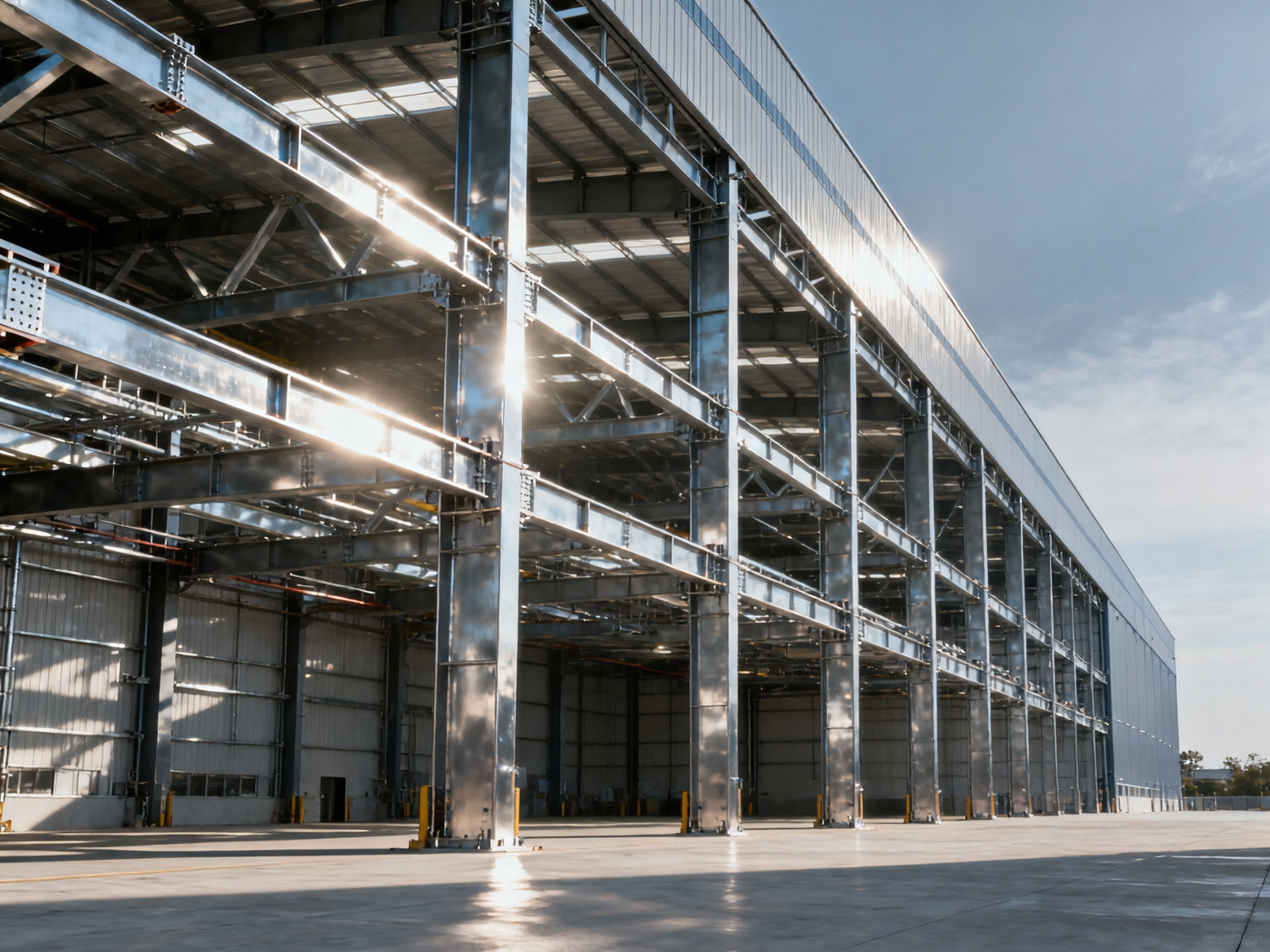
As the demand for efficient and durable industrial facilities continues to grow, understanding the key cost factors that influence steel structure warehouse prices in 2026 has become crucial for procurement officers, project managers, and business decision-makers. With advances in materials, engineering standards, and market dynamics, evaluating these factors helps enterprises make informed investment choices and achieve better value from their steel structure warehouse projects.
1. Market Overview and Pricing Dynamics in 2026
The global steel construction sector continues its steady growth, with projected increases of around 3.5% annually leading up to 2026. In China and the Asia-Pacific region, the momentum is even stronger—steel structure warehouses are becoming the backbone of logistics and manufacturing expansion. Pricing mechanisms in this segment depend heavily on raw material fluctuations, transportation costs, and policy factors such as carbon control initiatives and construction standard upgrades.
In early 2026, the average steel price index is expected to range between 4,200–4,850 RMB per ton. This represents a moderate adjustment compared with previous cycles. For enterprises planning large-scale warehouse projects, this interval could influence total budget differences of up to 8–12% depending on design complexity and material selections.
Shandong Yuegong Steel Structure Co., Ltd. (YG Steel Structure) leverages its 100,000㎡ production base and 50,000-ton annual capacity to stabilize costs through internal efficiency and bulk raw material procurement. Such professional capacity enables delivery of both light and heavy structural components across diverse applications including industrial parks and logistics centers.
To provide a clearer view, the following table outlines key 2026 market parameters impacting warehouse steel structure pricing.
As shown, raw materials remain the dominant cost driver. However, optimization in fabrication and logistics through automated production lines can reduce total project expense by roughly 5–7%, enhancing overall competitivity.
2. Technical Factors Affecting Steel Structure Warehouse Costs
Technical specifications significantly determine structural performance, construction speed, and long-term maintenance costs. The choice of steel grade—often Q235, Q345, or higher-strength variants—affects both load-bearing capacity and unit pricing. A Q345 steel column, for example, can handle 15–20% greater load than Q235 at only around 8% higher cost, often making it the more economical choice in high-clearance warehouses.
In addition, design precision and fabrication tolerance (typically within ±0.5 mm) can reduce onsite welding, saving up to 10–12 hours of installation time per 1,000㎡ project. Advanced CNC plasma cutting and modular connecting systems implemented by YG Steel Structure ensure consistent accuracy under these strict parameters.
The following comparison demonstrates how different design configurations influence total project output and cost-effectiveness.
In real-world applications, integrating modular systems such as the Museum Steel Structure design concept allows for precise alignment during assembly and reduces structural deformation risk. This type of high-performance steel solution is gaining adoption in both industrial and cultural facility construction for its balance of strength and flexibility.
For 2026 warehouse projects exceeding 20,000㎡, cost savings of up to 5% can be achieved through frame optimization and prefabricated column-beam systems, especially when executed through fully qualified producers like YG Steel Structure.
3. Procurement Considerations and Vendor Selection Criteria
For corporate procurement teams and project management units, selecting an appropriate steel structure partner involves balancing cost, lead time, and compliance assurance. Procurement cycles for medium-sized warehouses typically run from 8–12 weeks, encompassing 3 distinct stages: design consultation, fabrication, and on-site erection.
Key evaluation dimensions should include:
- Material source stability and batch traceability records for each steel grade.
- Production line capacity—verify whether supplier can deliver 500–1,000 tons per month effectively.
- Design qualification, ideally holding Class A Steel Structure Design Certification similar to YG Steel Structure.
- Installation service network and after-sale structural maintenance scope.
Combining digital modeling (BIM) and pre-installation simulation can enhance decision accuracy, especially for customized facilities requiring height clearances beyond 12 meters or exposure to wind loads above 0.6 kN/m². These technical parameters often define contract pricing variations of up to 10%.
Incorporating design concepts from proven models such as Museum Steel Structure further enhances precision, benefiting modern warehouse aesthetics and durability simultaneously.
4. Standards, Compliance, and Future Trends
Moving into 2026, national standards like GB50017-2017 and GB51022 continue to set the benchmark for design strength calculations and steel structure safety. Environmental requirements also tighten, emphasizing recyclability rates above 80% and coatings with VOC content below 420g/L. Suppliers able to meet these parameters will be favored during corporate verification processes.
Shandong Yuegong Steel Structure, with Class I Construction Qualification and adherence to ISO9001 quality management system, consistently meets both domestic and international regulatory expectations. The company’s precision fabrication and quality testing deliver structural systems capable of 30+ years service life with minimal maintenance intervals.
Emerging technologies—particularly automated welding, AI-assisted structural optimization, and dynamic load simulation—are forecasted to improve project efficiency by around 15–20% by 2026, contributing to cost predictability and sustainability. These advancements allow procurement teams to plan multi-year facility expansion strategies based on stable performance indicators.
In summary, compliance alignment, digital integration, and vendor expertise remain the strategic levers for managing steel structure warehouse costs effectively while sustaining long-term operational reliability.
5. FAQ: Practical Procurement Questions for 2026 Projects
How long does a typical steel warehouse project take from design to completion?
For a standard 10,000㎡ warehouse, design typically takes 2–3 weeks, fabrication around 4–6 weeks, and on-site assembly 2–4 weeks, depending on logistics and weather conditions. Total duration generally ranges from 8–12 weeks.
What are the main cost savings opportunities during procurement?
Combining multiple orders to secure bulk steel procurement, optimizing roof and column spacing (generally 6–9 m intervals), and using pre-welded modules can yield cost reductions of 5–10%. Engaging suppliers with integrated design-to-installation workflows, such as YG Steel Structure, further consolidates these gains.
What certifications should a reliable supplier hold?
Look for Class I Construction Qualification, ISO9001 Quality Management, and Class A Steel Structure Design Certification. These ensure reliability in both fabrication and structural safety reviews, minimizing project risks.
Are steel warehouses environmentally sustainable compared to concrete ones?
Yes. Steel structures have higher material utilization efficiency (up to 98%), reusable components, and faster assembly cycles, reducing site waste and enabling over 80% recyclability at project end of life.
6. Why Choose YG Steel Structure for 2026 Steel Warehouse Projects
With over 20 years of continuous development, Shandong Yuegong Steel Structure Co., Ltd. combines robust design expertise, certified manufacturing capability, and integrated project delivery. Its modern 100,000㎡ facility houses multiple production lines designed for both high-volume industrial frames and customized public facility structures.
Procurement and project management teams partnering with YG Steel Structure gain:
- Accurate material estimation services with ±3% margin of error for budget precision.
- Flexible delivery cycles within 6–10 weeks for small and mid-scale warehouses.
- Support for complex engineering configurations requiring long spans of up to 80 meters.
- Complete documentation for compliance audit and lifetime technical support.
For procurement teams assessing steel warehouse investments in 2026, consulting YG Steel Structure ensures clarity in cost composition, confidence in design compliance, and long-term structural integrity. Enterprises are encouraged to reach out for consultation on customized solutions, parameter confirmation, or quotations tailored to upcoming project timelines.
Related Posts
- ▶ Steel Structures: Meeting Client Demands with Precision
- ▶ What Project Managers Should Know Before Approving a Steel Structure Warehouse Plan
- ▶ Comparing Steel Structure Warehouses with Traditional Concrete Buildings in 2026
- ▶ How Energy Efficiency Is Changing the Future of Steel Structure Warehouse Design
- ▶ 5 Ways to Reduce Construction Time for Your Steel Structure Warehouse Project
- ▶ Is a Steel Structure Warehouse the Best Option for Cold Storage Facilities?
Send Us A Message